




Mental Health in Film & TV Under Pressure
The media and entertainment industry may be a powerhouse of creativity, but behind the scenes, it is grappling with a serious mental health crisis. Driven by poor working conditions, tight deadlines, and insecure contracts, many professionals in film, TV, and production are facing severe psychological strain. At the Media Production & Technology Show 2025, industry leaders made it clear — change is not optional, it’s critical.
Startling Stats Reveal Industry Crisis
According to the Looking Glass Survey, 30% of media professionals had suicidal thoughts last year — a rate six times higher than the general population. Worse, 64% are actively considering leaving the industry altogether. With only 12% believing the workplace is mentally healthy, the numbers paint a bleak picture.
The FTVC has seen over 10,000 workers access its mental health services in just one year — from helplines to confidential counselling. But these reactive measures aren’t enough. What’s needed is a structural and cultural reset across media workplaces.
Root Causes: Uncertainty, Pressure, and Silence
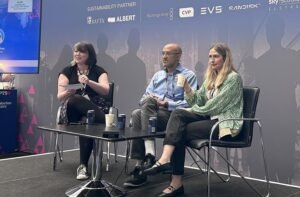
The panel discussion at MPTS brought to light a disturbing reality: uncertainty, deadline pressure, and fear of retaliation are causing a toxic loop. Michelle White, co-director of 6ft From The Spotlight, highlighted how this pressure drives people into silence — afraid to speak up about mistreatment.
This silence enables victimization and perpetuates an environment where mental health takes a backseat.
“For a long time, we didn’t expect the industry to be a mentally healthy place to work”
Marcus Ryder, FTVC
Rewriting the Culture: A Call for Leadership Change
Ryder emphasized that toxic norms, once accepted as part of the job, must be challenged. From 12-hour days to public outbursts, poor management has often been romanticized as a hallmark of creative excellence..
Both Ryder and White believe that leadership training and a shift in mindset are essential. The goal? To build psychologically safe, not fear-driven, creative spaces.
Prevention is the Best Production Policy
White’s organization introduces on-set welfare coordinators who help identify and mitigate stress before it snowballs into crisis. But the timing matters.
She advocates for a “welfare map” from the early development stage — covering everything from team dynamics to anti-bullying protocols. These strategies don’t require large budgets — just awareness and intention.
Resetting the norm
Such difficulties were seen as “earning your stripes”, Ryder says, to the point where, in his early days as a manager, “I didn’t believe, in my heart of hearts, that we could actually create great programmes and work decent hours”.
“I was wrong, and I was humbled by discovering that,” he adds, but unless managers see healthier working conditions being effective in practice, he says, many will continue to believe that 12-hour days and shouting at colleagues are the only ways to produce great work.

Ryder also acknowledges that many of the issues currently facing producers and directors, such as precarious work and unstable working patterns, have affected craft and post roles for decades.
White agrees that a “mindset shift” is crucial to resolving the crisis, and argues that leadership and management training could help achieve this.
“TV environments tend to be extremely psychologically unsafe environments,” she says. “But the elements of a safe environment are free, they don’t cost anything to implement.”
TV productions will always be “fast-paced, high-pressure, creative environments”, she says, and there’s nothing wrong with that – but they shouldn’t be fearful ones.
Ultimately, she says, most of the experiences of poor management behaviour and bullying stem from manager ignorance and lack of training rather than malice.
Ryder compares the situation to the growing awareness of the importance of health and safety over the past 30 years – in the early days of his career, he points out, there simply was no requirement to fill out risk assessments or to consider health and safety.
“Then there was a major shift at the BBC, at all broadcasters, in how they treated physical risks in production,” he says. “There needs to be an acknowledgement, not just from an individual broadcaster or individual commissioners, but from government level and regulator level to heads of all the broadcasters, in the same way we saw that shift in the 1990s with physical health.”
Towards a Healthier Future for the Creative Workforce
Just like physical safety became a priority in media production during the 1990s, experts argue it’s time to give mental wellbeing the same commitment — from government regulation to broadcaster policy.
Mental health support in the media shouldn’t be a reactive emergency tool. It must be integrated, proactive, and normalized — ensuring that creativity never comes at the cost of wellbeing.
Keywords:
Mental health in TV industry, Film and TV Charity, media production wellbeing, MPTS 2025, workplace mental health, on-set welfare coordinators, 6ft From The Spotlight, psychological safety in media, mental health support in entertainment, Looking Glass Survey


 Share your Details for subscribe