Process automation is no longer a pilot experiment — it’s a boardroom priority. From oil and gas to chemicals, fertilizers, and pharmaceuticals, industries are racing to deploy AI, IIoT, and advanced control systems at enterprise scale. Under tightening ESG mandates and rising regulatory scrutiny, leaders are unifying edge-to-cloud data, predictive analytics, and robotics to achieve safer, more efficient, and more sustainable operations. The shift is redefining competitiveness: cutting downtime, optimizing energy, and elevating quality in real time.
With increasing global pressure to operate efficiently and sustainably, the process industry is being reshaped by technology. This vast sector produces everything from pharmaceuticals to plastics and petrochemicals — and is now at the center of a digital revolution.
 Growth at Scale — and New Challenges
“Today’s process industry is witnessing unprecedented momentum, propelled by rising domestic demand, global supply chain realignments, and transformative government initiatives,” says *Dr. Bijal Sanghvi*, Managing Director, Axis Solutions Limited. With India’s chemical industry projected to reach USD 300 billion by 2025 and pharma poised to hit USD 130 billion by 2030, growth opportunities abound. But this acceleration comes with stricter emission norms, tougher safety standards, and more complex compliance. Dr. Sanghvi emphasizes that only companies embracing integrated automation, advanced instrumentation, and data-driven systems will balance competitiveness with sustainability.
 Cautious but Determined Digital Transformation
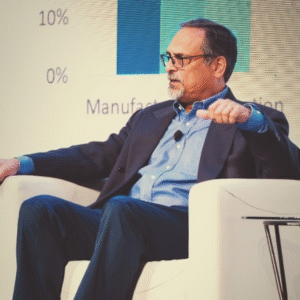
According to *Mark Sen Gupta*, Director of Research, ARC Advisory Group (USA), digital transformation is gathering momentum, albeit unevenly. Pharmaceuticals and biotech are leading with platform technologies and personalized therapies, while legacy systems and fragmented data remain hurdles. Regulatory demands — particularly around decarbonization and safety — are intensifying. “Despite these challenges, strategic integration of technology and regulatory alignment is helping future-ready companies stay competitive,” Gupta says.
*Smitha Rao*, Founder & Director of OjasQuest, notes that AI adoption is moving from pilots to enterprise rollouts. Safety remains paramount, and hybrid approaches — combining AI with expert validation — are enabling confidence in automation without compromising reliability.
From Monitoring to Intelligence

*
Aradhaya Srivastava* of WAGO India highlights how AI, IIoT, and automation are now foundational, not experimental. Predictive maintenance is reducing downtime and extending asset life, IIoT platforms are enabling real-time visibility, and robotics are taking on hazardous tasks. “Automation is streamlining repetitive and dangerous operations, reducing human error, and improving both safety and product quality,” Srivastava explains.
 *Dinesh Thukaram*, Chief Solutions Officer, Utthunga
, adds that companies are starting to see measurable gains in energy optimization, safety, and uptime. “The challenge ahead is less about technology readiness and more about scaling these solutions. Leaders are those moving beyond pilots into enterprise-wide deployment,” he says.
Data, Cloud, and the Future of Decision-Making
The cloud is becoming the new control tower. Industrial DataOps frameworks are unifying IT and OT streams, digital twins are enabling proactive maintenance, and AI-driven inspection is elevating quality. “Traceability and compliance are improving through real-time, cloud-based analytics,” says Gupta. Rao agrees, noting that predictive analytics and cloud-enabled dashboards empower decision-makers with agility in a volatile world.
 ESG as a Competitive Imperative
Sustainability is no longer optional. “Meeting carbon reduction and ESG targets is reshaping capital expenditure and operational workflows,” says Thukaram. The emphasis is on reducing waste, improving energy efficiency, and adopting cleaner technologies — not just for compliance, but as a driver of profitability and stakeholder trust. From green hydrogen in refining to continuous manufacturing in pharma, industries are testing the limits of viable decarbonization.
What’s Next?
The next decade will be defined by AI-driven optimisation, digital twins, and domain-led digital integration. Srivastava points to Industry 4.0 as the backbone of transformation, while Thukaram emphasizes integrated digital twins that bridge physical and virtual worlds. Innovations in energy management, AR/VR-enabled decision-making, and adaptive supply chains will shape resilient and future-ready operations.
The Verdict
Process automation is no longer just about efficiency. It’s about building intelligent, connected, and sustainable ecosystems that balance productivity with responsibility. As regulatory and ESG pressures intensify, technology isn’t just an enabler — it’s the only path forward.
In 2025, the winners in process industries will be those who move fastest from pilots to scale, blending automation, AI, and sustainability into the DNA of their operations.





 Share your work with UNI Network Magazine. Upload your PDF below.