


Building the Autonomous Factory of the Future
Building the Autonomous Factory of the Future
February 04, 2026
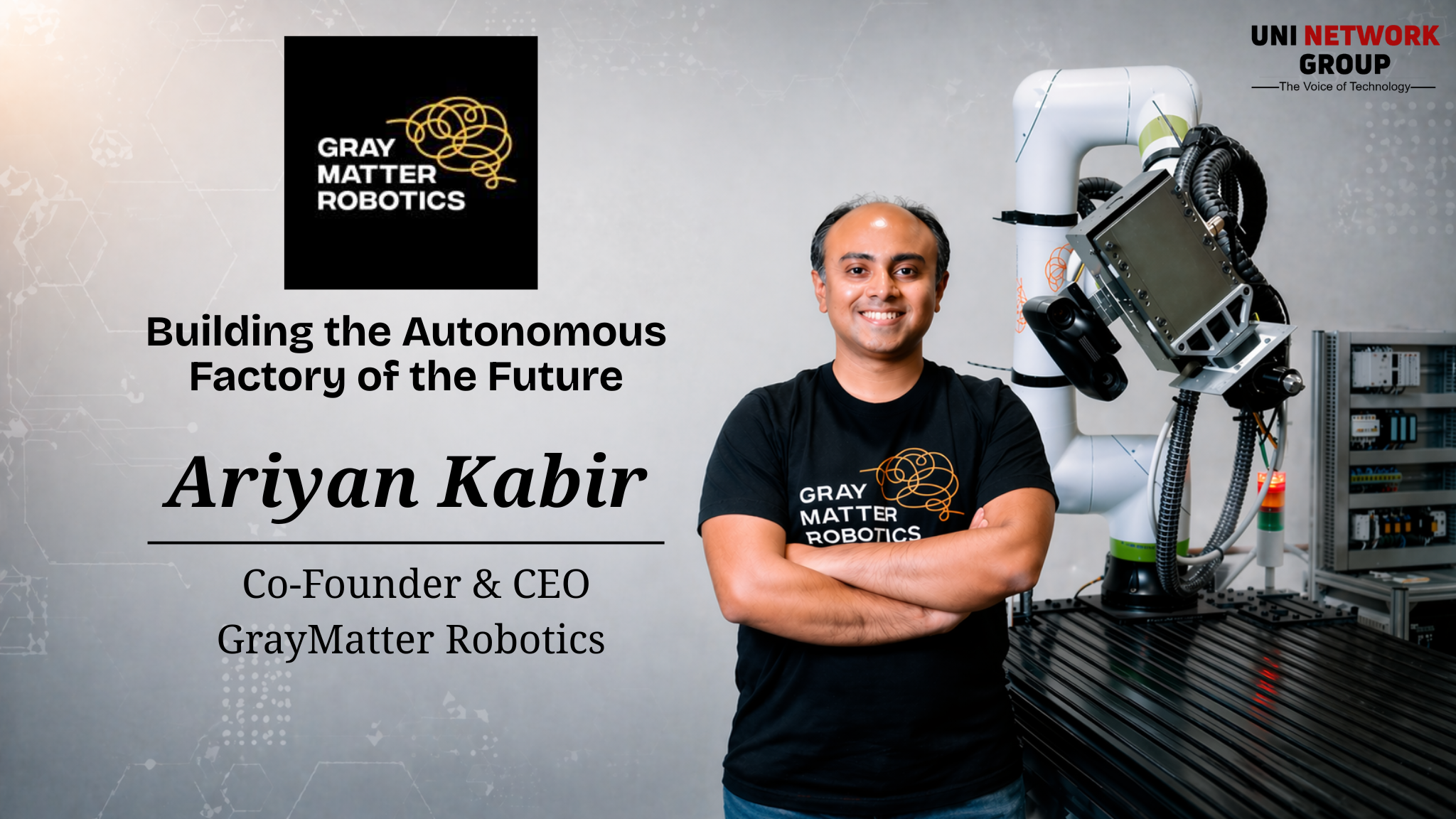
An Exclusive Interview with Ariyan Kabir, Co-Founder & CEO, GrayMatter Robotics
KEY TAKEAWAYS
- Ariyan Kabir founded GrayMatter Robotics to bridge the gap between automation potential and reality, addressing labor shortages and manual manufacturing challenges.
- By developing AI-powered robotic systems, GrayMatter enables robots to adapt to high-mix manufacturing environments where traditional automation struggles.
- TFrom a five-person startup to global deployments, the company has processed over 30 million square feet of surfaces while improving productivity.
Manufacturing is the foundation of modern economies, yet the reality inside factories often contradicts the image of fully automated production lines that many people imagine. While robotics has transformed certain sectors, nearly 90% of manufacturing operations worldwide are still performed manually.
This gap between automation potential and industrial reality is exactly the challenge GrayMatter Robotics is working to solve.
In this exclusive conversation with UNI Network Group, Ariyan Kabir, Co-Founder and CEO of GrayMatter Robotics, shares how the company was founded, the lessons learned from early deployments, and how artificial intelligence is redefining the future of industrial automation.
The Beginning of GrayMatter Robotics
Q1. Let’s start from the beginning. How did the idea of GrayMatter Robotics come to life?
Ans. The story goes back to my graduate school days. I met my co-founders during my PhD at the University of Southern California (USC). One of them, who later became our CTO, and our Chief Scientist were deeply involved in robotics, AI, and manufacturing research.
Around that time, USC launched the Center for Advanced Manufacturing, which created a platform where researchers could regularly interact with manufacturers from across industries—from Fortune 100 companies to small and mid-sized businesses.
Every week, we would hear manufacturers talk about the challenges they were facing. And one issue kept coming up again and again: they didn’t have enough skilled workers to perform manufacturing tasks.
Before that, I had a very naive perspective. Like many people, I assumed most factory work was already automated. You often see videos of robots working in automotive plants, and it gives the impression that robots make everything.
But the reality is very different.
The Reality Behind Manufacturing
Q2.What surprised you the most when you started interacting with manufacturers?
Ans. What shocked us was the reality that around 90% of manufacturing is still done by human hands.
Many of these jobs are extremely repetitive and physically demanding. Workers performing operations such as sanding, grinding, polishing, or surface finishing often face serious health issues over time.
After doing these jobs for several years, people commonly develop injuries like carpal tunnel syndrome, shoulder injuries, back problems, and respiratory issues.
At the same time, manufacturers are facing a major labor shortage.
Industry projections show that the United States alone could face a shortage of 3.8 million skilled manufacturing workers in the coming decade.
This shortage is already creating real consequences. For example, if a city wants to buy a fire truck today, they may have to wait three to six years to receive it. Hospitals ordering ambulances often wait two to three years.
These numbers were eye-opening for us.
Why Robots Haven’t Solved This Problem
Q3.If automation already exists, why aren’t robots solving these challenges?
Ans. That’s exactly the question we asked manufacturers.
Robots work extremely well in environments like automotive factories, where tasks are repetitive and parts are identical. In those cases, robots can repeat the same programmed motion thousands of times.
However, most industries operate very differently.
Industries such as aerospace, marine, specialty vehicles, construction equipment, and consumer products involve what we call high-mix manufacturing.
This means there are many different product variations, and even within the same product, parts may vary slightly due to materials or manufacturing processes.
In those situations, traditional robots struggle because they rely on manual programming for each variation.
Programming a robot for every possible variation becomes extremely expensive and time-consuming. That’s why many tasks are still done manually.
That realization led us to ask a bigger question:
How do we make robots intelligent enough to adapt to real-world manufacturing environments?
The First Big Validation
Q4.At what point did you realize that this problem was much bigger than you initially thought?
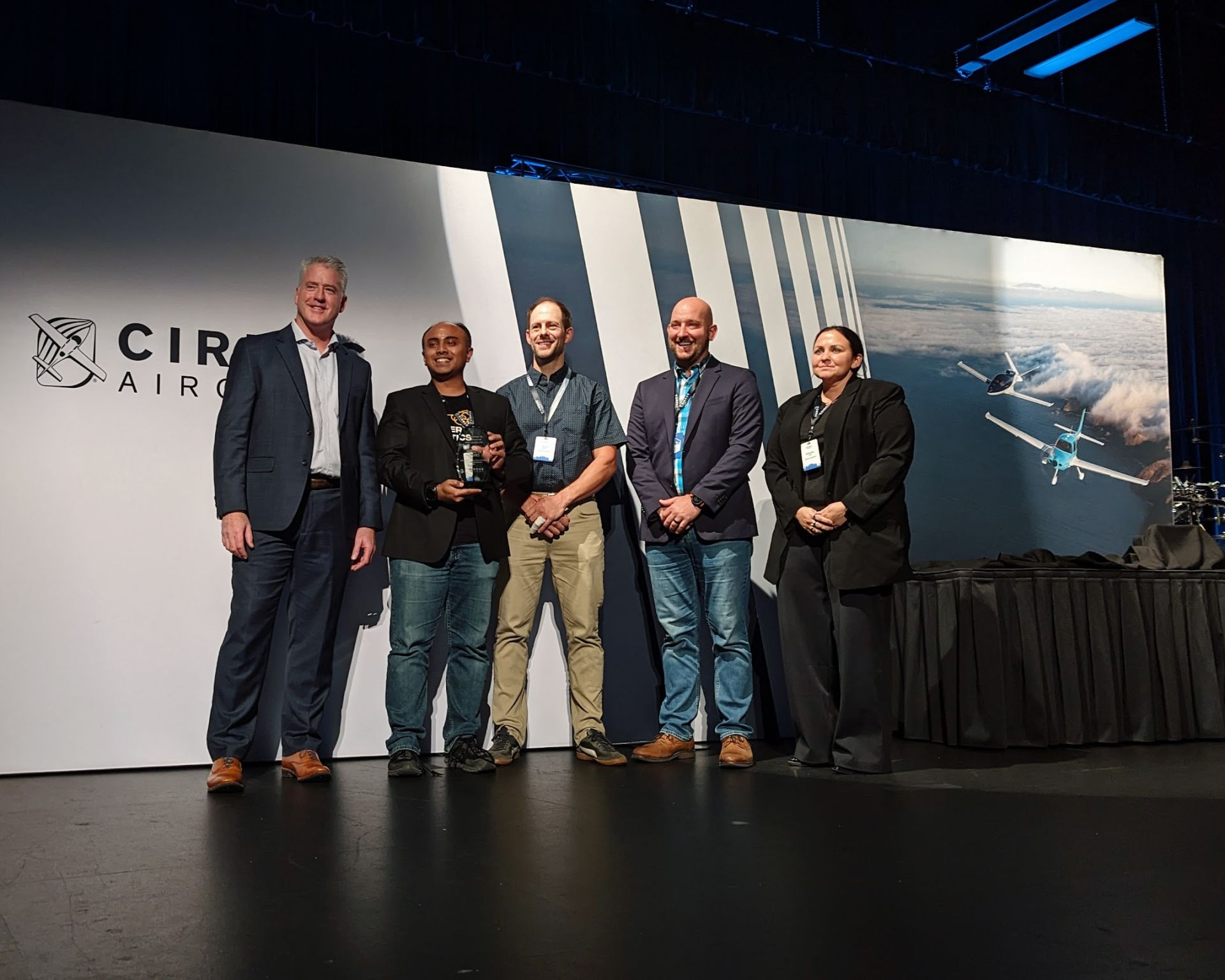
Ans.In 2017, we participated in the CUPSA Innovation Award competition and showcased our work at Hannover Messe, which is the world’s largest industrial trade show.
We demonstrated a robotic system designed for surface finishing applications.
What happened there completely changed our perspective.
Every day, hundreds of manufacturers visited our booth and shared their challenges. Many of them asked if they could buy the system we were demonstrating.
The funny part was—we were still students. We didn’t even have a commercial product yet.
But that experience showed us that the problem we were trying to solve wasn’t limited to the U.S. It was a global challenge across almost every manufacturing industry.
Starting a Company in 2020
Q5. You launched the company in early 2020, which was a very challenging time globally. What gave you the confidence to move forward?
Ans. Manufacturing is upstream of everything else in the economy.
If you stop producing parts, you cannot sell products, you cannot run services, and you cannot support supply chains. The entire economy depends on manufacturing.
When we looked at the market, we realized that the opportunity was enormous. The tasks currently performed manually represent a multi-trillion-dollar global market.
But more importantly, solving this challenge is critical for economic resilience and national security.
So we decided to take the leap and start the company.

Winning the First Customer
Every startup has a defining moment. What was your first major breakthrough with customers?Ans.Our first customer was a manufacturer producing composite parts for buses and trains.
Interestingly, they had been searching for a robotic sanding solution for five years, but they couldn’t find one that worked reliably.
At that time, we didn’t actually have a finished product. We only had some technology prototypes.
So we had to find a creative way to convince the customer to work with us.
We proposed a subscription-based model.
We told them: you don’t have to pay anything upfront. If the system works and delivers value, you pay us a monthly fee.
In exchange, we asked for a three-year commitment if the system succeeded.
That approach removed the financial risk for the customer, and they agreed.
The Reality of Deployment
Q7. Was the first deployment successful right away?
Ans. Not at all.
We demonstrated the system successfully in our lab, so we were very confident.
Then we packed everything into a rented truck and drove to the customer’s facility to install it.
When we turned on the system, the robot was working—but the quality was not good enough.
The robot was sanding the parts, but it wasn’t meeting their quality standards.
We ended up spending 12 weeks working day and night in that factory, breathing dust and trying to understand what was happening.
What we discovered was that real-world manufacturing environments are incredibly complex.
Factors like temperature, humidity, and material behavior can dramatically affect results.
That experience forced us to rethink our approach and build a much more sophisticated physical AI system.
Eventually, we solved the problem and the customer was extremely happy.
That was the moment we knew we were onto something real.
From Startup to Industry Impact
Q8.Today, how large is GrayMatter Robotics and what kind of impact has the company created so far?
Ans. When we started, we were just five people.
Today we have grown to about 130 employees, and our robotic systems are deployed across multiple countries and 16 states in the U.S.
Our robots have processed more than 30 million square feet of surface area, which is equivalent to over 520 American football fields.
More importantly, we have helped manufacturers significantly improve productivity and reduce costs.
In one case, a tow truck manufacturer was able to triple their production output while reducing unit costs by nearly 40%.
Ans. But beyond productivity, one of the most meaningful impacts is improving the quality of life for workers.
Some operators who previously performed these tasks manually told us that after using our systems, they could finally go home without physical pain and spend time with their families.
They started at MassRobotics with just two employees and one prototype. Today, they operate fleets of robots in the U.S. and Australia and have grown to nearly 30 employees. It’s a perfect example of how targeted innovation and the right ecosystem support can accelerate growth.
Those moments are incredibly rewarding.
 Editorial Desk







 Share your Details for subscribe