

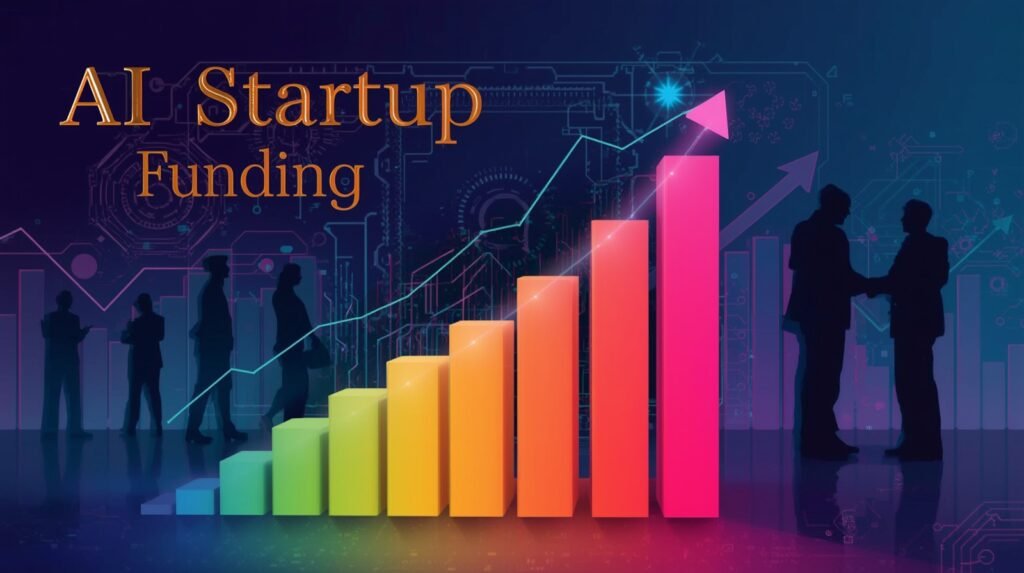
September 10, 2025, marked a turning point for the artificial intelligence (AI) industry, as multiple startups across the globe announced major funding rounds totaling billions of dollars. From software automation and media creation to semiconductor design and nuclear operations, these investments highlight growing investor confidence and underscore AI’s central role in shaping the future of technology and the global economy.
Cognition AI: Redefining Software Development
Cognition AI, the developer of the AI coding agent Devin, raised $400 million in a funding round led by Founders Fund, reaching a valuation of $10.2 billion. Devin streamlines software development by automating coding tasks, reducing errors, and accelerating delivery times. The new funding will deepen enterprise integration and enhance machine learning capabilities, positioning Cognition AI as a market leader in AI-assisted software engineering.
Mistral AI: Europe’s Open-Source Powerhouse
French startup Mistral AI secured $2 billion (€1.7 billion) in Series C funding, with backing from ASML Holding NV, Nvidia, General Catalyst, and Index Ventures. Valued at $13.7 billion, Mistral has become one of Europe’s most valuable AI firms. Specializing in open-source generative AI models, the company plans to expand research, infrastructure, and global partnerships—cementing Europe’s place in the global AI race.
 Runware: Democratizing AI Media Creation
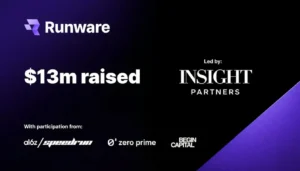
San Francisco-based Runware raised $13 million in a seed round led by Insight Partners, with contributions from Andreessen Horowitz’s Speedrun Fund and others. The platform provides a unified API granting access to thousands of AI models for image, video, audio, and text generation. Runware’s mission is to make AI media accessible to creators and small-to-medium enterprises, broadening the impact of generative AI.
 Astrus: Accelerating Semiconductor Innovation
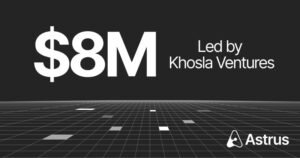
Canadian startup Astrus, based in Toronto and Waterloo, raised $8 million to advance its physics-aware foundation model for analog chip design. By enabling engineers to simulate circuits more efficiently, Astrus is tackling one of the semiconductor industry’s most pressing challenges. With AI-driven hardware innovation becoming critical, Astrus is well positioned to strengthen global competitiveness in chip design.
PixVerse AI: Scaling Global Video Creation
Beijing-based PixVerse AI, developed by AIsphere, secured $60 million in Series B funding led by Alibaba, with Antler joining as a new investor. Serving over 100 million users worldwide, PixVerse enables high-quality, rapid AI video production for creators, educators, and advertisers. The company’s expansion reflects the growing demand for short-form, personalized video content in global markets.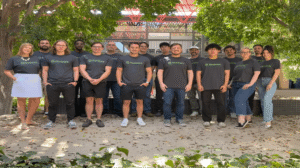
Nuclearn: Bringing AI to Nuclear Energy
Nuclearn raised $10.5 million in Series A funding led by Blue Bear Capital, with backing from AZ-VC, Nucleation Capital, and SJF Ventures. The startup is developing AI tools to automate and optimize nuclear reactor operations, enhancing safety and predictive maintenance across more than 65 reactors worldwide. This marks an important step in applying AI to critical infrastructure and clean energy sectors.
Industry Implications
The combined funding across these startups signals a robust and diversified AI investment landscape. Analysts note that capital inflows are no longer confined to experimental AI research but are now driving real-world applications in software, hardware, media, and energy. This shift underscores AI’s role as a catalyst for economic growth, job creation, and global competitiveness.
Experts predict that increased funding will accelerate adoption, foster cross-sector collaboration, and establish new global standards. Europe’s rise, North America’s momentum, and Asia’s dominance highlight that AI is becoming a truly international innovation frontier.
Conclusion
September 10, 2025, stands as a landmark in the timeline of AI advancement. With Cognition AI, Mistral AI, Runware, Astrus, PixVerse, and Nuclearn securing significant funding, the sector is entering a new phase of rapid expansion and broad adoption. As these companies scale their technologies, they are pois

 Share your work with UNI Network Magazine. Upload your PDF below.