




Women in Technology Leadership: Building the Future of AI, Payments, and Developer Innovation
Bo English-Wiczling on How AI, Developer Innovation, and Diverse Leadership Are Shaping the Future of Digital Commerce
June 20, 2026
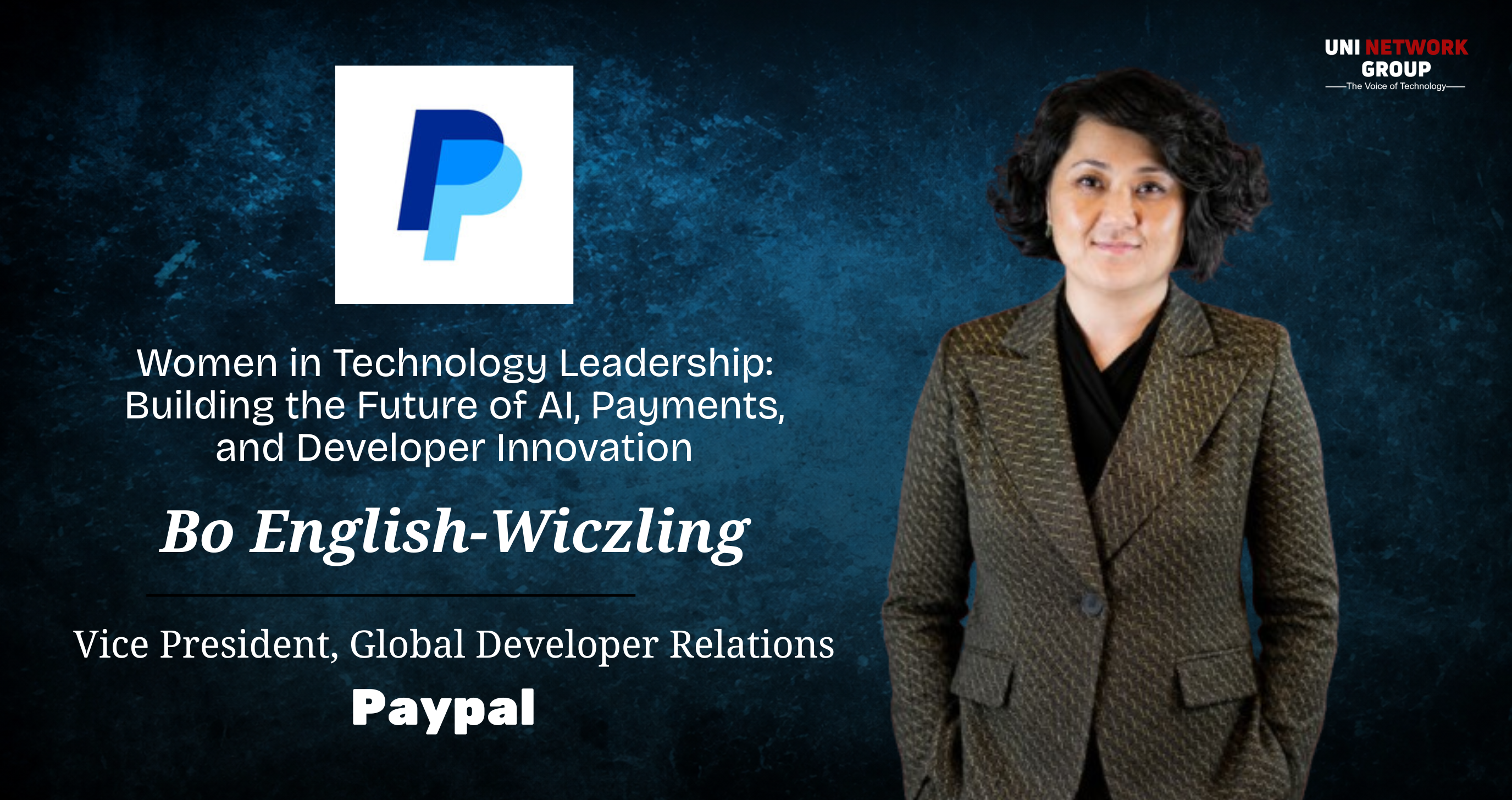
An Exclusive Conversation with Bo English - Wiczling, Head of Developer Relations & Developer Platforms at PayPal
KEY TAKEAWAYS
- AI is transforming software development, making critical thinking and problem-solving more valuable than coding.
- Developer experience drives innovation, requiring seamless tools, documentation, onboarding, and platform usability.
- Diverse teams foster stronger innovation, better decision-making, and improved products through varied perspectives.
- Future success depends on combining human creativity, communication, execution, and AI-powered capabilities.
As artificial intelligence reshapes industries and digital payments continue to power the global economy, technology leaders face the challenge of balancing innovation, customer experience, and business transformation. In this exclusive interview with UNI Network Magazine, Bo English - Wiczling shares insights on leadership, AI - driven disruption, developer ecosystems, and the skills that will define tomorrow's workforce.
Q1. Your career journey spans software development, product management, and executive leadership. What has been the driving force behind your success?
Ans. I began my career as a web developer in the early days of the internet. Over time, I discovered that technology is not only about writing code - it's about solving problems, communicating ideas, and creating value at scale. That led me into product management, portfolio leadership, and eventually executive roles at organizations such as Amazon, Best Buy, Oracle, and now PayPal.
What has remained constant throughout my career is a passion for building solutions that make a meaningful impact. Every role has been an opportunity to improve systems, empower teams, and deliver better experiences for customers.

Q2. What attracted you to PayPal, and what excites you most about your current role?
Ans. PayPal presents a unique blend of startup agility and enterprise - scale operations. The company processes enormous volumes of transactions globally, yet there are still opportunities to innovate and improve.
What excites me most is the ability to solve complex challenges that directly affect millions of developers, merchants, and consumers. I enjoy stepping into areas that need transformation and building solutions that create measurable impact across a global ecosystem.
Q3.What major initiatives are you leading today?
Ans. A significant focus is improving the developer experience across PayPal's platform. Developers expect intuitive documentation, seamless onboarding, clear APIs, and efficient troubleshooting
We are modernizing our documentation ecosystem, improving developer tools, enhancing platform usability, and simplifying integration processes. While some of these improvements may not be highly visible to end users, they are critical to helping developers innovate faster and more effectively.The goal is simple: make it easier for businesses to build and grow using PayPal technologies.
Q4. How is artificial intelligence transforming the payments and technology landscape?
Ans. AI is reshaping virtually every industry, and payments are no exception. Organizations are now exploring how AI can automate repetitive tasks, improve operational efficiency, accelerate development cycles, and enhance customer experiences.The real challenge is not whether to adopt AI, but how to implement it responsibly and effectively.
Businesses must find the right balance between automation and human oversight while ensuring AI delivers meaningful value.Those who successfully integrate AI into their workflows will gain significant competitive advantages in the years ahead.

Q5. Many believe AI is changing the role of developers. How do you see the profession evolving?
Ans. The definition of a developer is changing rapidly. AI can already generate large amounts of code, create applications, and accelerate software development.However, technology alone does not solve problems. The most valuable skill is no longer memorizing syntaxit is the ability to think strategically, creatively and logically, define requirements clearly, and guide AI toward the right outcomes.
Future developers will be architects of solutions. Success will depend on critical thinking, structured problem - solving, and understanding user needs rather than simply writing code.
Q6. What skills should universities prioritize to prepare students for the future workforce?
Ans. Educational institutions must evolve alongside technology.Three capabilities will become increasingly important:

1. Logical Thinking
Students need strong analytical and problem - solving abilities. The ability to break down complex challenges into structured solutions will remain essential regardless of technological advances.
2. Communication and Influence
Great ideas only create impact when they are communicated effectively. Professionals must learn how to present ideas, influence stakeholders, and collaborate across teams.
3. Execution
Execution separates vision from results. The ability to turn concepts into tangible outcomes will continue to be one of the most valuable professional skills.These capabilities will remain relevant even as AI automates many technical tasks.
Q7. How is PayPal helping businesses navigate the AI era?
Ans. We are actively exploring how AI can support entrepreneurs and merchants. Through partnerships with leading AI platforms, we're developing capabilities that help business owners learn, make informed decisions, and operate more efficiently.
The future of commerce will increasingly involve intelligent agents that assist with decision - making, business operations, customer engagement, and growth strategies. This evolution will make entrepreneurship more accessible than ever before.
Q8. Why is diversity important in technology leadership?
Ans. Diversity is not simply a social objective it is a business advantage.Teams with diverse perspectives, experiences, and backgrounds produce stronger ideas and better products. Innovation thrives when people challenge assumptions and bring different viewpoints to the table.For leaders, building diverse teams is one of the most effective ways to improve creativity, decision - making, and overall product quality.
Q9. What technology trends will have the greatest impact on businesses over the next five years?
Ans. AI will continue to dominate the technology landscape. We are still in the early stages of understanding its full potential.Organizations that learn how to leverage AI strategically, not just adopt it, will emerge as leaders.
The next wave of innovation will focus on intelligent agents, automation, and AI - powered decision - making systems that enhance productivity and business outcomes.The companies that thrive will be those that combine technological innovation with human creativity and strategic thinking.
Q10. What message would you like to share with the next generation of technology professionals?
Ans. Don't focus solely on technical skills. Technology changes quickly, but the ability to to think holistically and critically, communicate effectively, and execute consistently will always be valuable. Stay curious, keep learning, and embrace change. The future belongs to those who can combine human creativity with the power of emerging technologies.
Editor's Note
Bo English - Wiczling's perspective highlights a fundamental shift taking place across industries: technology is no longer just about coding - it is about innovation, problem - solving, and creating meaningful impact. As AI reshapes the global economy, organizations and professionals alike must focus on adaptability, strategic thinking, and lifelong learning to remain competitive in the digital age.
 Editorial Desk







 Share your Details for subscribe