



The modern era of energy abundance began with the advent of the steam engine, a technological breakthrough that unlocked unprecedented industrial growth. Over the centuries, humanity’s demand for energy has expanded exponentially, powering economies, industries, and cities around the world.
However, this rapid expansion has come at a significant environmental cost. Rising carbon emissions and climate change now present one of the most pressing challenges facing global society. Achieving net-zero emissions by 2050 requires not only policy commitments but also fundamental transformations in how energy is generated, distributed, and consumed.
At the center of this transformation are several global industrial technology companies developing the systems that will power the next phase of sustainable growth.
The Engineering Backbone of the Energy Transition
The energy transition is often framed through policy discussions, climate targets, and international agreements. Yet the practical implementation of this transition relies heavily on engineering innovation.
Electrification, automation, digitalisation, and advanced grid technologies are becoming the core mechanisms through which industries reduce emissions and improve energy efficiency. These solutions enable renewable energy integration, smarter infrastructure, and optimized industrial operations.
Companies specializing in industrial automation, power systems, and digital energy management are therefore playing a pivotal role in enabling the shift toward sustainable energy ecosystems.
Industrial Leaders Driving the Transformation
Several global technology firms are helping shape the infrastructure that supports the transition to cleaner energy.
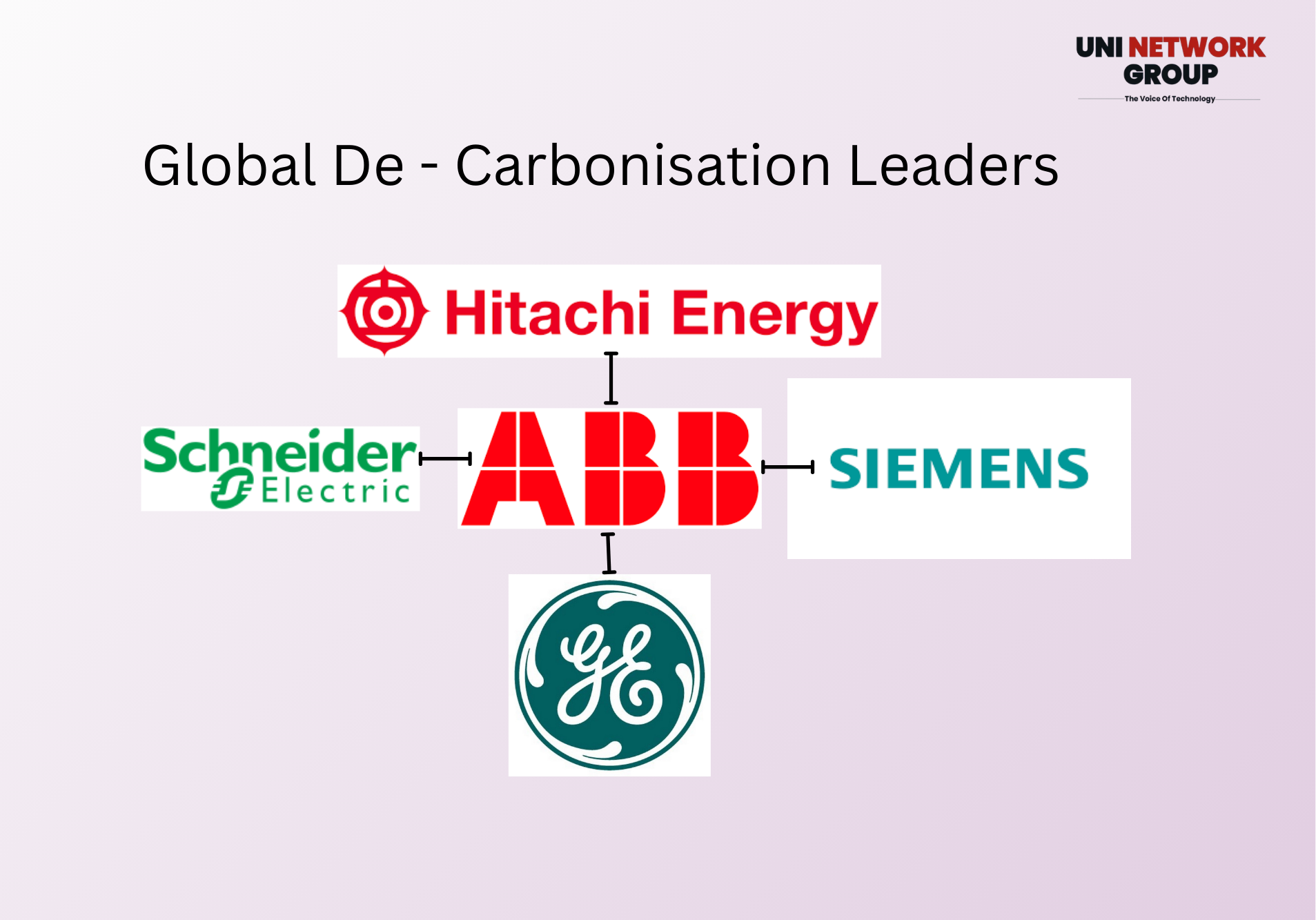
 ABB
ABB
ABB has positioned itself as a major force in industrial electrification. The company develops advanced motors, drives, robotics, and power management systems that help industries significantly reduce energy consumption.
Its solutions allow factories, transportation networks, and utilities to operate more efficiently while lowering their carbon footprint.
 GE Vernova
GE Vernova focuses on power generation, grid modernization, and renewable integration. Through its technologies in wind power, gas turbines, and grid solutions, the company aims to deliver reliable and cleaner electricity to meet rising global demand.
Its work supports both renewable deployment and the modernization of existing energy infrastructure.
 Siemens
Siemens integrates electrification, digital intelligence, and automation to develop smart industrial systems. The company’s solutions help create intelligent factories, connected cities, and digital energy networks that optimize performance and sustainability.
Through digital twins and industrial AI, Siemens is also transforming how infrastructure and manufacturing systems are designed and operated.
 Schneider Electric
Schneider Electric specializes in energy management and automation technologies that enable organisations to monitor and optimize energy usage.
Its platforms allow buildings, data centers, factories, and infrastructure systems to reduce energy consumption while improving operational efficiency and resilience.
 Hitachi Energy
Hitachi Energy is focused on building the high-voltage transmission and grid technologies needed to move renewable energy across regions and continents.
Its advanced power electronics, grid integration systems, and HVDC transmission solutions help ensure that renewable energy generated in remote locations can reach urban centers reliably.
Electrification and Automation: The Twin Drivers
Two technological forces are shaping the future of sustainable energy systems: electrification and automation.
Electrification replaces fossil-fuel-based systems with electricity powered increasingly by renewable sources. Meanwhile, automation and digital monitoring enable industries to operate with greater efficiency, reducing waste and energy consumption.
Together, these technologies form the foundation of next-generation industrial systems capable of supporting both economic growth and environmental sustainability.
Strategic Significance for the Global Economy
The transition to sustainable energy systems is not merely an environmental imperative—it is also an economic transformation.
Industries such as manufacturing, transportation, infrastructure, and urban development are undergoing significant technological shifts. Companies capable of delivering integrated electrification, automation, and digital energy solutions are becoming central to this transition.
As countries invest heavily in renewable energy, grid modernization, and smart infrastructure, the technologies developed by these industrial leaders will play an increasingly critical role in shaping the global energy landscape.
Conclusion
The energy transition is often discussed through policies, climate commitments, and international negotiations. Yet its ultimate success will depend on the engineering systems that power modern economies.
Industrial technology companies such as ABB, GE Vernova, Siemens, Schneider Electric, and Hitachi Energy are quietly building the infrastructure required for a sustainable future. Through electrification, automation, and advanced grid technologies, they are laying the foundations of a cleaner and more resilient global energy system.


 Share your Details for subscribe