



Keeping Automation Working: A Conversation with Jeff, Managing Director at Roboworx
Roboworx Managing Director Jeff explains why robotics success depends not just on deployment, but on ownership, maintenance, and long-term operational support.
February 04, 2026
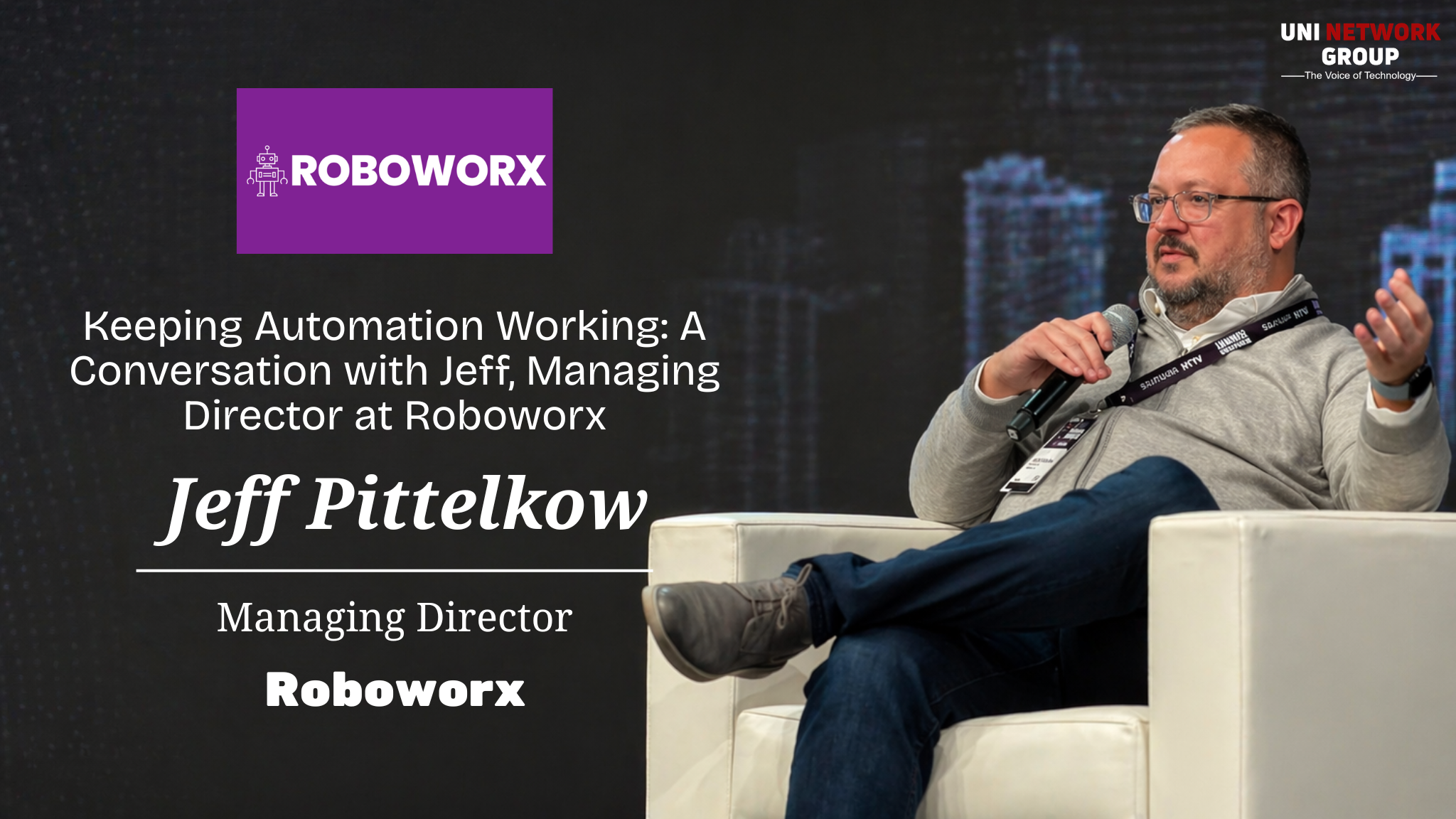
An Exclusive Interview with Jeff Pittelkow,Managing Director, Roboworx
KEY TAKEAWAYS
- Jeff explains that robots rarely fail due to technology; failures occur when organizations lack clear ownership, maintenance planning, and operational responsibility.
- Roboworx focuses on post-deployment robotic support, ensuring systems remain reliable through preventative maintenance, operational oversight, and continuous optimization.
- As automation expands across industries, Jeff highlights shrinking ROI timelines and emphasizes operational readiness as the key to successful robotics adoption.
Industrial automation promises efficiency, scalability, and long-term productivity gains. Yet many organizations discover that deploying robots is only the beginning of the journey. The real challenge lies in ensuring those systems continue to operate reliably over time.
UNI Network Editorial spoke with Jeff Pittelkow, Managing Director at Roboworx, about the real challenges behind industrial automation, why robots fail after deployment, and how companies can ensure long-term ROI.
Q1. Jeff Pittelkow, can you start by telling our readers about yourself and Roboworx?
Ans. My role is focused on helping organizations get real, sustained value from their automation investments. Roboworx exists to support robots after they’ve been deployed – because that’s where most challenges actually begin. We don’t design or manufacture robots ourselves; instead, we make sure robotic systems continue to operate reliably in real-world environments through ongoing support, maintenance, and operational ownership.
Q2. Can you give a simple example that illustrates this challenge?
Ans. A simple example most people can relate to is a robotic vacuum at home. It works well most of the time, but occasionally it gets stuck under furniture or tangled in a cord. At home, you notice it and fix it yourself. In a commercial environment – like a hospital, warehouse, or large office – that same issue raises a bigger question: whose responsibility is it to intervene? When that ownership isn’t defined, the robot just stays stuck and eventually stops being used.

Q3. Many companies see automation as a “set it and forget it” solution. Why is that a misconception?
Ans. Automation is great – until it stops working. Even the most advanced, well-designed robots still require small, ongoing interventions such as cleaning sensors, updating routes, recalibrating systems, or responding when something unexpected happens. The misconception is that robots operate perfectly on their own forever. In reality, without clear ownership and support, even minor issues can snowball and significantly reduce utilization.
Q4. How does this problem scale in industrial and warehouse automation?
Ans. In industrial environments, the stakes are much higher. Companies are often making $20–30 million investments in automation, expecting major efficiency gains. The technology itself usually performs as promised, but small operational issues – dirty sensors, blocked paths, misconfigured zones, or untrained staff – can quietly reduce throughput. Without ongoing support, those systems never operate at peak performance, which puts ROI at risk.
Q5. What types of issues do Roboworx teams typically encounter in the field?
Ans. Most of the issues we see are not complex technical failures. They’re relatively simple problems – a wheel that needs cleaning, a software setting that needs adjustment, or a route that no longer makes sense due to changes in the environment. The challenge is that on-site teams often aren’t trained or empowered to address these issues, so instead of fixing them, the robot gets taken out of service.
Q6. How does Roboworx approach robotics differently from traditional vendors?
Ans. We don’t sell robots – we sell a service. Our focus is on long-term success, not just deployment. That means supporting customers from pre-deployment consulting through on-site support, preventative maintenance, and continuous optimization. When customers see robots consistently working and delivering measurable ROI, their confidence in automation grows.
Q7. In your view, what is the biggest barrier to robotics adoption today?
Ans. The biggest barrier is misaligned expectations. Many organizations think they’re purchasing a piece of equipment, when in reality they’re adopting a new operational process. Robots do reduce labor strain and increase efficiency, but they also introduce new workflows and responsibilities. If those aren’t planned for upfront, adoption becomes much harder than expected.
Q8. Where did the idea for Roboworx come from?
Ans. Roboworx was incubated within ARO, a managed services company where I spent more than a decade, most recently leading technology and innovation. We already had a national field-service infrastructure, and we saw a clear gap in the robotics industry. OEMs were building great machines, but customers needed reliable, local support wherever those robots were deployed.
Q9. What separates successful robotics programs from failed ones?
Ans. The difference is ownership. Successful programs have someone clearly responsible for the robot fleet – whether that’s an internal team or an outsourced partner. Every failed deployment I’ve encountered failed because no one was paying attention to the robots on a day-to-day basis. When ownership is clear, problems get solved before they become failures.

Q10. What are Roboworx’ key priorities for the year ahead?
Ans. Our focus is on three main areas: expanding our footprint across more locations and industries, broadening our service offerings – especially around consulting and strategy – and strengthening partnerships across the robotics ecosystem. When the industry grows, we grow alongside it.
Q11. What services does Roboworx provide to support that ownership?
Ans. We provide end-to-end robotic fleet management, including customer success, preventative maintenance, break-fix support, and on-site technicians at different skill levels depending on the complexity of the system. Many of our partnerships last several years, allowing us to support robots throughout their entire operational lifecycle.
Q12. How does Roboworx approach workforce diversity in robotics?
Ans. We’re proud to have a very diverse workforce across many ethnic and cultural backgrounds. Like much of the robotics industry, we still see fewer women entering technical field roles than we’d like, but it’s something we actively try to address through outreach, visibility, and creating clear career pathways.
Q13. Where do you see the robotics and automation industry heading in the next five years?
Ans. The industry is at a real inflection point. We’re seeing consolidation, with weaker companies exiting the market and stronger players emerging. At the same time, ROI timelines are shrinking – from around 36 months to closer to 18 months – which makes automation more attractive across warehouses, hospitality, security, and public infrastructure.
Q14. How can companies or students interested in robotics connect with Roboworx?
Ans. Companies can reach us directly through our website and schedule time with our team right away. We’re also always interested in hearing from students and young professionals who want to build careers in robotics. The industry needs people who understand not just the technology, but also the operational side of automation.
 Editorial Desk







 Share your Details for subscribe