

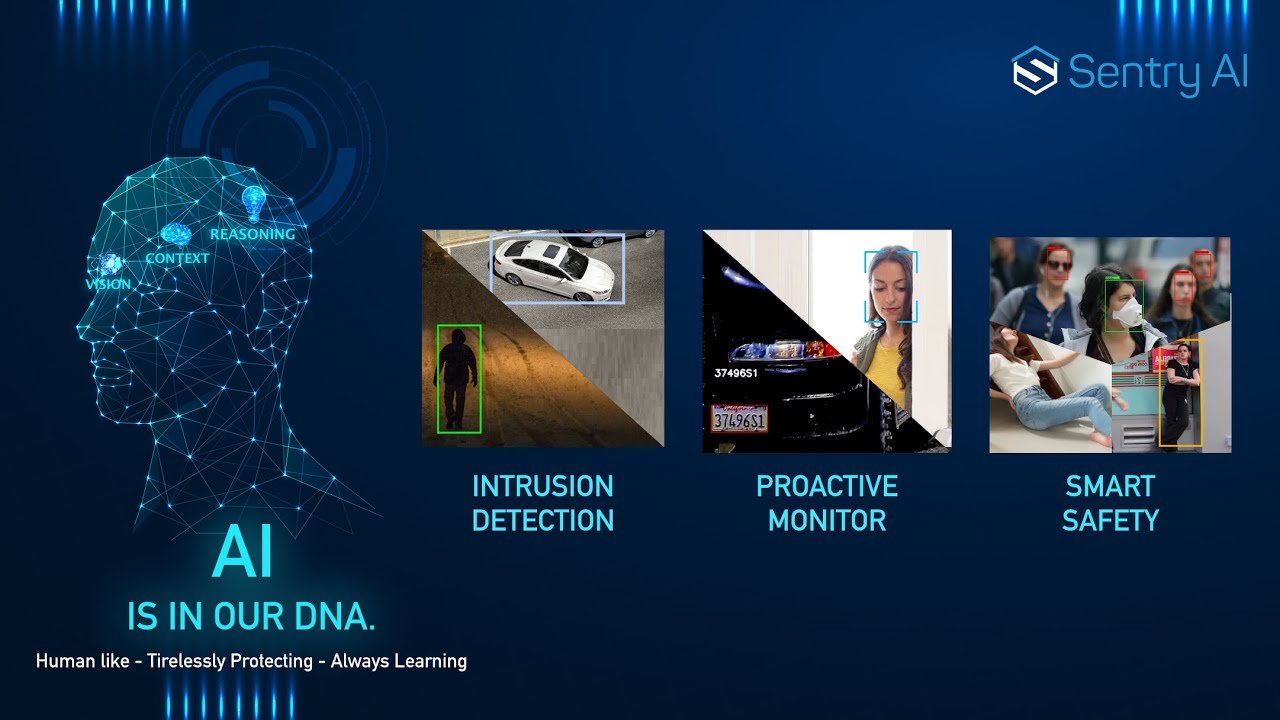
Sentry AI has announced the launch of its Smart Guard solution, positioning it as a transformative step in physical security. Designed for enterprises, government agencies, and multifamily communities, Smart Guard integrates artificial intelligence with situational awareness to deliver protection that outperforms traditional human guards—at a fraction of the cost.

The physical security landscape has been under increasing pressure, with property owners facing challenges from theft, vandalism, trespassing, and safety violations. Rising incidents combined with the high cost of employing human security staff have created demand for scalable alternatives. AI-based solutions like Sentry AI’s Smart Guard are stepping in to fill this gap.
Operational Details
Unlike conventional guards, Smart Guards continuously monitor video feeds, access control systems, speakers, and sensors. The AI system distinguishes between routine activities and potential threats, responding with real-time interventions such as voice-down warnings, lighting deterrents, or alerts to property managers. According to the company, the system delivers 24/7 consistent protection at less than 20% of the cost of human guards.
Economic Impact
Fortune 50 companies, national retailers, real estate groups, and public agencies have already adopted or piloted the technology. In addition, Sentry AI has secured partnerships with Carahsoft for public sector deployments and USI Insurance, which recognizes Smart Guard as a trusted provider for reducing liability risks. By cutting costs and minimizing security risks, the solution offers measurable value for businesses managing large properties or infrastructure.
Strategic Significance
Smart Guard’s adaptability across diverse environments—from residential communities to critical infrastructure—underscores its potential to become an industry standard. “AI is rewriting the rules of physical security,” said Uday Kiran Chaka, CEO of Sentry AI. COO Farhat Ali added that the technology “continuously learns to improve performance,” reinforcing its long-term viability.

 Share your work with UNI Network Magazine. Upload your PDF below.