


The Future of Autonomous Manufacturing: How AI, Orchestration & Smart Logistics Are Redefining the Factory
The future of manufacturing is collaborative - where intelligent machines amplify human capability rather than replace it.
August 1 , 2026
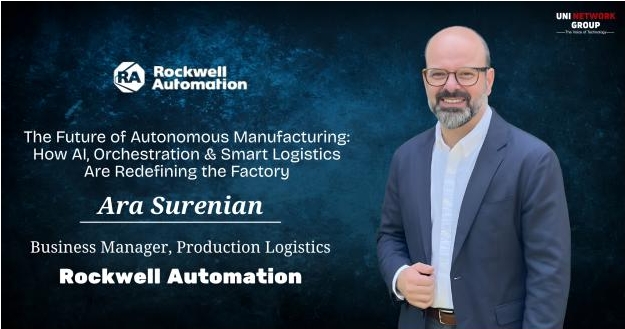
An Exclusive Interview with Ara Surenian, Rockwell Automation
Business Manager, Production Logistics | Expert in Production Planning, Scheduling, Logistics & AI
KEY TAKEAWAYS
- AI is transforming manufacturing through intelligent planning, scheduling, and autonomous operations.
- Successful digital transformation depends as much on people and change management as on technology.
- Connected manufacturing ecosystems deliver significantly greater business value than isolated automation projects.
- Customer-centric innovation remains the foundation of great product development.
- The future of manufacturing is collaborative - where intelligent machines amplify human capability rather than replace it.
As manufacturing enters a new era driven by AI, autonomous systems, and intelligent orchestration, organizations are rethinking how factories operate. In this exclusive conversation with UNI Network Magazine, Ara Surenian shares his perspective on AI adoption, digital transformation, autonomous material movement, customer-centric innovation, and the future of manufacturing.
Q1. Manufacturing is entering an AI-driven era. From your perspective, what is the single biggest transformation AI is bringing to production planning and factory operations?
Ans. Ara Surenian: AI is fundamentally changing how manufacturers make decisions. Instead of relying solely on static scheduling models or human experience, AI continuously analyzes operational data and optimizes production in real time. From planning and scheduling to autonomous material movement and quality inspection, AI enables manufacturers to improve throughput, reduce inventory, and make smarter decisions faster than ever before.
However, AI is only as effective as the quality of data behind it. Clean, structured, and contextualized data is the foundation of successful AI implementation.
Q2. Every company today is talking about AI. What separates organizations that successfully adopt AI from those that struggle?
Ans. Ara Surenian: Technology alone doesn't create transformation. Success comes from identifying meaningful business problems first and then applying AI where it delivers measurable value. Many companies become overwhelmed by the number of AI solutions available. The winners are those that avoid chasing hype and instead focus on integrating AI into their broader manufacturing ecosystem rather than treating it as a standalone technology.
Q3. As a product leader, how do you build products that remain relevant in such a rapidly evolving technology landscape?
Ans. Ara Surenian: Everything starts with listening. The best products come from understanding customer pain points - not assumptions. We spend significant time listening to customers, identifying common patterns, studying market trends, and understanding competitive innovation. Product management isn't simply building software. It's solving real industrial problems in a structured and practical way.
Q4. Manufacturers are investing heavily in digital transformation, yet many initiatives fail. Why?
Ans. Ara Surenian: Technology isn't usually the biggest challenge. People are. Digital transformation is fundamentally about change management. Employees naturally worry about job security, changing responsibilities, and learning new technologies. Successful organizations invest just as much in communication, training, and workforce engagement as they do in technology deployment.
When employees understand how technology improves safety, productivity, and job quality, adoption becomes significantly easier.
Q5. Rockwell Automation has been pioneering connected manufacturing. Can you share a real-world success story?
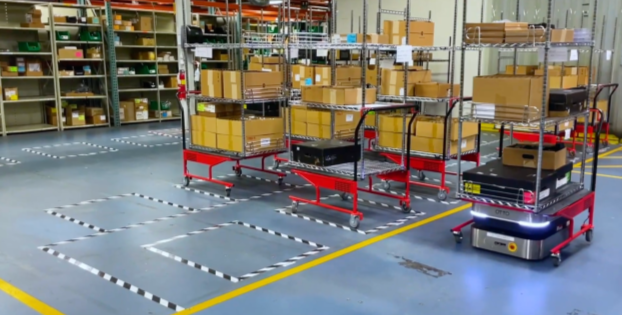
Ans. Ara Surenian: One of our best examples comes from our own manufacturing operations. At Rockwell's Twinsburg facility, autonomous mobile robots were introduced to automate material movement. We then connected those robots with our FactoryTalk® Orchestration™ software solution, allowing production systems to automatically request materials exactly when needed.
Instead of relying on manual requests, the entire process became synchronized - from production scheduling to warehouse dispatching and autonomous delivery. The result was improved throughput, lower inventory, fewer production delays, and a truly connected manufacturing ecosystem.
Q6. Many organizations are implementing automation as isolated projects. Why is system orchestration becoming so important?
Ans. Ara Surenian: Automation creates value. Connected automation creates exponential value. Installing an autonomous mobile robot solves one problem.
Connecting that robot with ERP systems, MES platforms, PLCs, warehouse software, and production scheduling creates an intelligent manufacturing ecosystem where every system communicates and optimizes together. That's where manufacturers achieve maximum ROI.
Q7. What advice would you give manufacturers beginning their digital transformation journey?
Ans. Ara Surenian: Start with business outcomes - not technology. Ask yourself: Where are we losing productivity? Where is waste occurring? Which repetitive activities could be automated? Where can data improve decision-making? Digital transformation should be approached as a long-term journey rather than a one-time technology investment.
Q8. Rockwell has spoken about the vision of highly autonomous factories. Does that mean manufacturing will eventually become human-free?
Ans. Ara Surenian: Automation will continue expanding, but humans will remain essential. Machines still require oversight, maintenance, optimization, engineering, and continuous improvement.
Manufacturing roles will evolve from repetitive manual tasks toward higher-value engineering, analytical, and operational responsibilities. The future isn't humans versus machines. It's humans working alongside increasingly intelligent machines.
Q9. You founded DemandCaster before its acquisition by Plex Systems. What entrepreneurial lessons continue to influence your leadership today?
Ans. Ara Surenian: Never stop listening to customers. Innovation never ends. Every time you think your product is complete, new technologies emerge, customer expectations evolve, and markets change. The companies that succeed are those that continuously innovate while remaining deeply connected to customer needs.
Q10. Finally, what advice would you offer the next generation of engineers and manufacturing leaders?
Ans. Ara Surenian: Manufacturing has never been more exciting. Technology will continue evolving, but the human element will always matter. Technical expertise is important, but empathy, communication, curiosity, and humility are equally valuable. The best engineers don't simply build technology - they solve real problems for real people. That combination of technical excellence and human understanding will define the next generation of manufacturing leadership.
 Editorial Desk







 Share your Details for subscribe