Fourier Data Center Solution Inc. unveiled its latest integrated modular AI infrastructure architecture during the “2026 Advanced Liquid Cooling Technologies” conference in Taipei, an event co-hosted with Intel Corporation. The company highlighted how system-level integration is becoming increasingly critical as AI and high-performance computing (HPC) deployments demand greater power density, faster deployment timelines, and advanced thermal management capabilities.
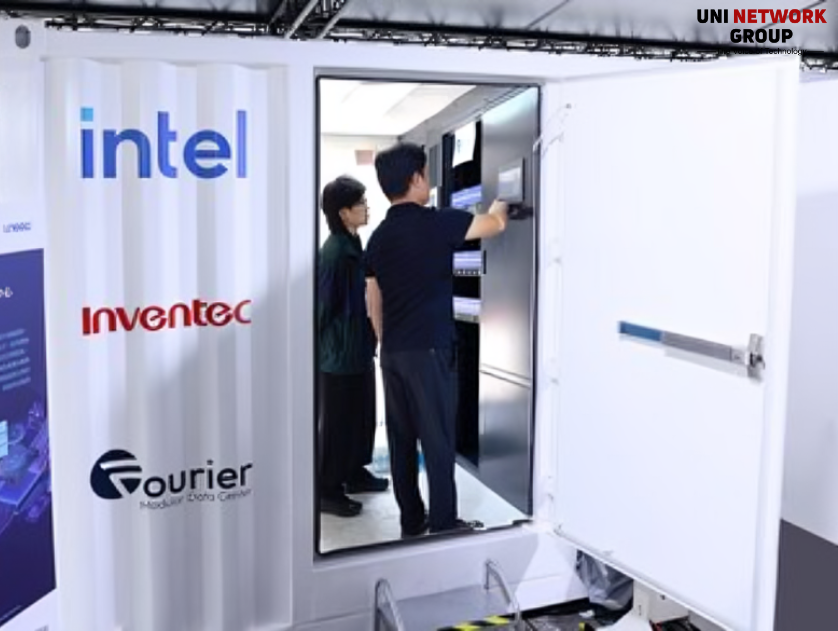
At the conference, Fourier and Intel jointly presented a fully integrated 20-foot modular data center container designed to combine cooling, compute, and power systems into a unified architecture. The container was showcased on-site, allowing attendees to experience the internal infrastructure layout and observe how liquid cooling, compute hardware, and power management technologies operate within a compact prefabricated environment.
The event underscored a broader shift occurring within the AI infrastructure ecosystem. As processors and packaging technologies continue to evolve, thermal management has emerged as one of the industry’s defining engineering challenges. Fourier emphasized that modern AI infrastructure is no longer dependent on isolated subsystem optimization, but instead requires coordinated integration across cooling, power distribution, and compute resources to ensure scalable and deployable performance.
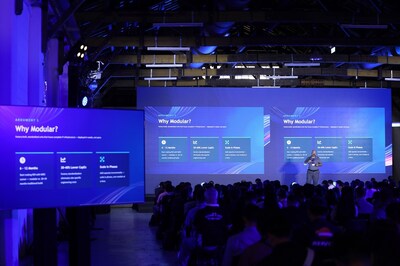
Fourier CRO Justin Cass delivered a keynote presentation on modular, flexible, and technology-agnostic AI infrastructure at the Intel co-hosted conference in Taipei.
During the conference, Fourier Chief Revenue Officer Justin Cass discussed the growing transition toward modular and technology-agnostic AI infrastructure platforms. According to the company, AI data centers are entering a phase where liquid cooling is becoming essential rather than optional, particularly as high-density workloads accelerate globally. Fourier stated that customers are increasingly prioritizing deployable integrated systems over incremental component-level improvements, especially for hyperscale AI and HPC environments.
Another major theme of the conference centered on deployment efficiency. Fourier highlighted how prefabrication, factory integration, and standardized modular design can significantly reduce deployment uncertainty, shorten project schedules, and accelerate time-to-revenue for AI infrastructure operators. The company noted that ecosystem-wide coordination between cooling technologies, system interfaces, and power architectures is helping reduce validation and compatibility bottlenecks traditionally associated with large-scale infrastructure rollouts.
The conference also reflected growing collaboration across the AI infrastructure value chain. Intel’s platform-based approach, combined with ecosystem partnerships, is enabling companies like Fourier to deliver integrated infrastructure solutions that support increasing computational density while maintaining operational reliability and thermal efficiency.
Looking ahead, Fourier stated that the future of global AI infrastructure will increasingly depend on integrated and prefabricated modular systems capable of supporting next-generation computing demands. The company plans to continue focusing on deployable infrastructure architectures designed to meet the speed, scalability, and density requirements of modern AI workloads.






 Share your Details for subscribe