



Huawei unveiled its Global Intelligent Public Service Solution during the Mobile World Congress 2026 in Barcelona, Spain. The announcement was made at the Global AI+ Public Service Summit, where government officials and technology partners discussed the role of artificial intelligence in transforming public services and accelerating digital government initiatives worldwide.
Global Public Service Solution for Digital Governments
During the summit, Saeed Xia, President of Huawei Global Public Services BU, introduced the company’s Global Public Service Solution. The framework is designed to help governments modernize public services by addressing challenges such as service inefficiencies, limited accessibility, and low citizen satisfaction.
The solution follows an architecture built on “1 digital foundation + 1 intelligent platform + N industry applications.” It aims to streamline public service delivery through integrated digital infrastructure, data-driven decision-making, and AI-powered automation. Huawei highlighted that the platform can enable “Chat-to-Process” services, intelligent decision support, and more efficient government operations.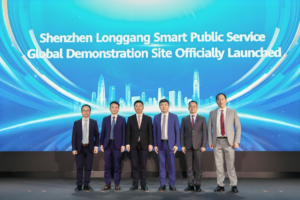
Global Perspectives on AI in Public Services
At the summit, Jason Slater, Chief of Digital Transformation and AI at United Nations Industrial Development Organization, emphasized that successful digital government strategies must go beyond technology adoption.
He noted that AI-driven public services should focus on inclusive, citizen-centered systems and interoperability, ensuring that digital transformation benefits communities at every level.
Government representatives also shared insights into national digital transformation strategies. Chomparee Chompurat, Deputy Permanent Secretary of Thailand’s Ministry of Digital Economy and Society, highlighted the country’s shift toward AI-enabled governance through a Cloud First infrastructure strategy and responsible AI integration.
Meanwhile, Carlos Eduardo Rodrigo Prado of AGETIC discussed Bolivia’s vision of expanding digital government capabilities to support inclusive national development.
Shenzhen Longgang AI+ Public Service Demonstration Site
Huawei also introduced the Shenzhen Longgang AI+ Public Service Global Demonstration Site, developed in partnership with the Longgang District Government in Shenzhen.
The initiative demonstrates an integrated public service model that connects four administrative levels—district, street, community, and campus. The system uses large language models to power intelligent customer service platforms that integrate government hotlines, physical service counters, and self-service digital channels.
According to Huawei, the system has achieved a 98% hotline connectivity rate, while AI-enabled verification systems have improved administrative review accuracy to over 95%.
Launch of Global Public Service Ecosystem Alliance
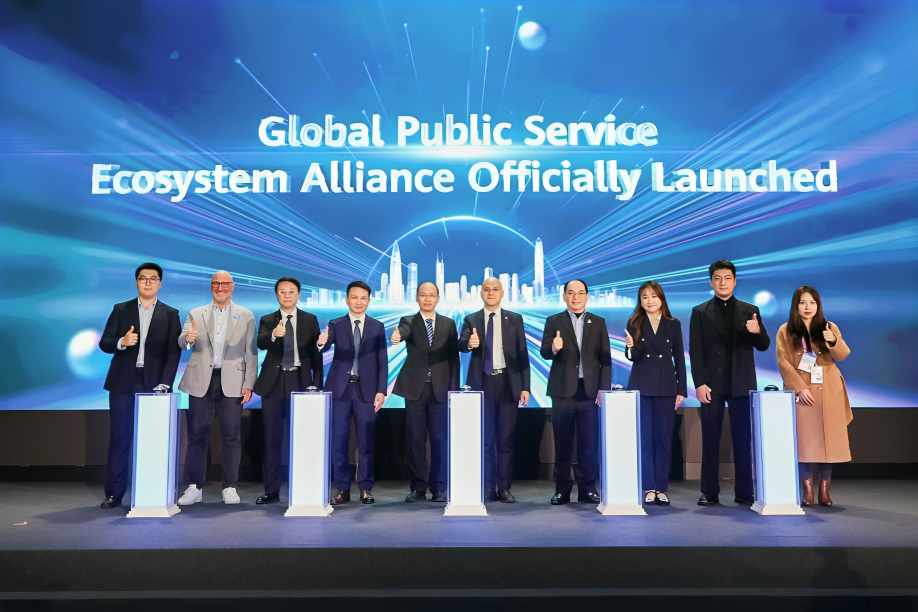
To further accelerate digital government innovation, Huawei also launched the Global Public Service Ecosystem Alliance. The initiative aims to bring together technology partners and public sector organizations to expand the adoption of AI-powered public services worldwide.
Partner organizations involved in the alliance include Nextcloud, Linewell, Seeyon, Digihail, SAINS, Nexconn, and iSSTech.
Huawei stated that the alliance will serve as a collaborative platform to explore new opportunities for digital public services and expand AI-driven governance solutions globally.
Strategic Significance
Huawei’s announcements at Mobile World Congress 2026 highlight the growing importance of AI-driven digital government ecosystems. As countries seek to modernize public services and improve citizen engagement, integrated AI platforms and cross-sector partnerships are expected to play a critical role in shaping the future of public administration.


 Share your Details for subscribe