
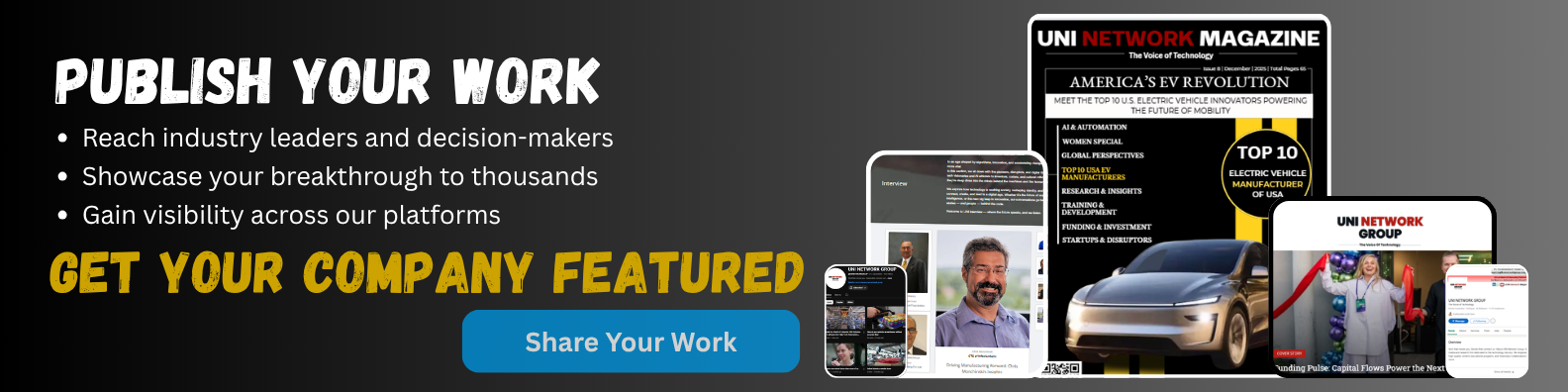


Driving Digital Transformation with Purpose: Shazia Mallick on AI, Leadership, and the Future of Enterprise Innovation
How strategic automation, operational excellence, and people-first leadership are reshaping global enterprises.
June 1, 2026
An Exclusive Interview with Shazia Nazz Mallick, General Manager - HCL America, Inc.
KEY TAKEAWAYS
- Shazia Mallick drives enterprise transformation through AI-powered automation, operational excellence, and scalable systems improving efficiency across global Fortune 500 clients.
- Successful digital transformation depends on workforce readiness, change management, cybersecurity, and aligning technology strategies with organizational business objectives effectively.
- HCLTech prioritizes continuous employee upskilling, enabling teams to integrate generative AI into workflows while enhancing productivity and innovation capabilities.
- Shazia emphasizes curiosity, mentorship, adaptability, and people-first leadership as essential qualities for thriving in rapidly evolving technology-driven industries.
Q1. Can you share your journey in technology and what your role looks like today?
Ans. I started my career in IT infrastructure and have spent more than 20 years working across large-scale infrastructure and digital transformation initiatives.Over time, my role evolved into improving service quality, driving knowledge management, enhancing operational efficiency, and accelerating automation and digital transformation initiatives globally.
At HCLTech America, I work closely with Fortune 500 clients across industries including healthcare, life sciences, finance, insurance, retail, manufacturing, and consumer goods. Working across multiple industries gives you a unique perspective on how emerging technologies are impacting organizations differently.For example, AI is significantly transforming healthcare and life sciences through areas like medical device integration, intelligent automation, and drug discovery.
My day usually starts early around 6 a.m. I dedicate time in the morning to meditation, reading, or simply creating mental clarity before the workday begins. The rest of the day involves collaborating with global stakeholders, managing large teams, overseeing transformation projects, and ensuring operational excellence across multiple initiatives.While officially the day may end around 5 or 6 p.m., technology leadership often extends beyond schedules. There are moments when projects demand extra focus and long hours, but when you genuinely enjoy the work you do, those challenges become part of the journey.
Q2. HCLTech has been actively driving digital transformation. How do you see AI shaping enterprise operations today?
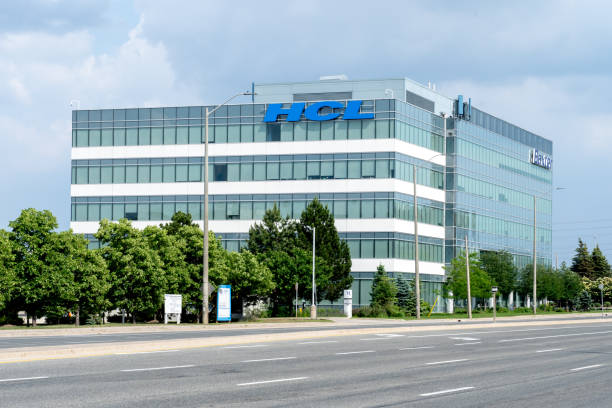
Ans. HCLTech has always positioned itself as an innovation-driven organization and an early adopter of emerging technologies.We have heavily invested in generative AI and continue integrating AI into enterprise services to create scalable, stable, and intelligent operational models for our clients.Through strong collaborations with partners such as Microsoft, Google, IBM, NVIDIA, and Cisco, we help organizations accelerate their AI transformation journeys while maintaining operational resilience and security.
One important aspect is workforce readiness. AI is not being positioned to replace critical thinking but rather to enhance productivity, efficiency, and performance. Employees are encouraged to integrate AI into their daily workflows to improve decision-making and operational effectiveness.Our approach combines generative AI, cybersecurity, cloud ecosystems, and enterprise platforms into repeatable, scalable solutions that create measurable business value.
Q3. What specific areas are you personally leading within this transformation journey?
Ans. I currently lead global teams focused on service quality and knowledge management while also managing Power Platform adoption for certain enterprise clients.Traditionally, quality and knowledge management processes were highly manual and repetitive. Teams spent enormous amounts of time on operational tasks that added limited strategic value.My focus has been on introducing AI-driven automation into these workflows.
We designed and implemented intelligent systems capable of automating repetitive tasks, inspections, audits, and operational processes. This allows teams to focus more on service improvement and strategic optimization rather than manual execution.For example, we have developed AI-driven solutions where the system itself can perform quality inspections and operational audits with very high confidence levels after proper training and calibration.The goal is not simply automation for the sake of automation. The objective is creating leaner, smarter operational models where human expertise is redirected toward higher-value outcomes.
Q4. Can you share an example of a project you are currently working on?
Ans. One of the major projects I am currently involved in focuses on IT Service Management (ITSM) transformation.The objective is to integrate automation and intelligent workflows into platforms such as ServiceNow and Jira to improve service delivery and operational efficiency.We are working on building structured CMDB repositories that make asset management, ticket categorization, workflow routing, and issue resolution more intelligent and automated.
For example, when incidents or requests are raised, the system can automatically identify the right resolver groups, reduce ticket misassignments, minimize delays, and improve resolution times.We are also integrating virtual agents and AI-powered chatbots capable of automating many frontline support functions traditionally handled manually by service agents.This significantly improves efficiency while also enhancing the overall user experience.
Another important transformation project I led involved enterprise-wide Power BI adoption. The organization previously operated with fragmented business intelligence systems across departments.Our objective was to unify enterprise data visualization into one centralized ecosystem where executive leadership could access integrated insights across all business functions.It was a two-year transformation journey involving multiple departments, data integrations, adoption strategies, and governance frameworks. Today, Power BI has become one of the organization’s key enterprise reporting platforms.

Q5. What are some of the biggest challenges organizations face during digital transformation?
One of the biggest misconceptions in transformation is believing that one solution fits every organization.Every client environment is unique. A strategy that works exceptionally well for one company may completely fail in another environment.One of the most common challenges I see is the absence of a unified transformation strategy. Different departments often have different priorities, which creates friction during implementation.The second major challenge is change management.Technology transformation is ultimately about people. If organizations fail to educate employees, address concerns, and prepare teams properly, adoption becomes extremely difficult.Another major issue is legacy infrastructure. Many organizations still rely heavily on older systems with poor integrations, making modernization more complex.Cybersecurity also remains a critical concern. As companies expand their digital footprint, concerns around cyber threats and operational risk often slow transformation initiatives.The key is balancing innovation with governance, security, and workforce readiness.
Q6. How is HCLTech approaching employee learning and upskilling during the AI era?
Ans. Continuous learning is deeply embedded within HCLTech’s culture.Unlike many organizations that responded to AI disruption with large-scale layoffs, HCLTech focused heavily on workforce upskilling and capability building.From the moment employees join the organization, there is a continuous ecosystem of learning opportunities available - including instructor-led training, virtual learning platforms, certifications, and domain-specific programs.
Generative AI training, for example, is being prioritized across all levels of the organization.The objective is not only technical upskilling but enabling employees to understand how AI can improve productivity and operational performance in practical ways.Partnerships with companies like Microsoft and Google also provide employees opportunities to pursue certifications and strengthen their technical expertise continuously.The philosophy is simple: before replacing talent because of skill gaps, invest in helping employees evolve with technology.
Q7. How open is HCLTech to innovation, startup collaboration, and new ideas?
Ans. At HCLTech, every employee is considered an “Ideapreneur.”The culture encourages employees at every level to bring ideas forward, regardless of hierarchy or designation.If an idea demonstrates value and impact, the organization supports turning that idea into reality.
This innovation-first mindset naturally extends into partnerships, collaborations, and ecosystem growth. HCLTech works closely not only with large technology providers but also with emerging organizations and evolving ecosystems that can contribute meaningful value.The organization strongly believes that innovation can come from anywhere.
Q8. How does HCLTech approach diversity and leadership inclusion?
Ans. Diversity is one of the strongest pillars within HCLTech.We have many accomplished women leaders leading major technology, operations, marketing, and business functions globally.Leadership figures such as Chair Person Roshni Nadar , CMO Jill Kouri and other women executives continue to inspire diversity and representation across the organization.
HCLTech operates as an equal-opportunity organization where hiring and growth are driven by skill, capability, and impact.There are also structured mentorship programs, leadership initiatives, coaching opportunities, and development platforms specifically designed to support women professionals and emerging leaders in technology.The organization actively creates environments where diverse talent can thrive and lead confidently.
Q9. What advice would you give students and young professionals entering the technology industry today?
Ans. Technology is evolving incredibly fast. By the time you master one skill, the industry has already started shifting toward the next innovation.My biggest advice is to stay curious.You do not need to know every technology in depth, but you should always stay informed about changing trends, emerging innovations, and industry evolution.The actual learning begins when you start working.
Be open to feedback, continuously learn, seek mentors, and never hesitate to ask questions.Many young professionals struggle because they hesitate to seek guidance from experienced leaders who can help accelerate their growth.Having the right mentors can significantly shape your career journey.Most importantly, believe that you are capable of creating impact. Curiosity, adaptability, and continuous learning will always keep you relevant in the industry.
Final Thought
- Shazia Mallick’s leadership reflects the evolving reality of enterprise technology - where AI, automation, operational intelligence, and people-centric transformation must coexist together.
- HHer approach demonstrates that successful digital transformation is not simply about implementing technology. It is about building scalable systems, empowering people, fostering innovation, and creating operational ecosystems that drive long-term impact.
- As enterprises continue navigating the next phase of AI-powered transformation, leaders like Shazia are helping shape a future where technology works not only smarter - but more meaningfully.
 Editorial Desk







 Share your Details for subscribe