



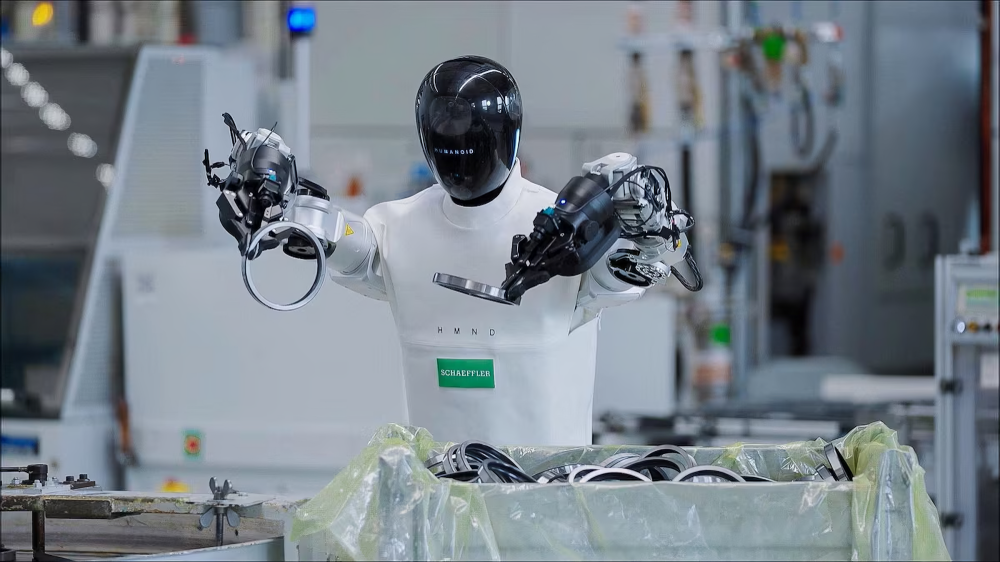
British robotics company Humanoid has announced plans to deploy between 1,000 and 2,000 humanoid robots across the global manufacturing facilities of German industrial giant Schaeffler by 2032, marking one of the largest publicly disclosed humanoid robot deployment agreements in the manufacturing sector to date. The initiative reflects a broader industry transition from experimental robotics demonstrations toward real-world industrial automation at scale.
The partnership highlights how manufacturers are increasingly turning to humanoid robotics to improve operational efficiency, address labor shortages, and modernize factory environments through advanced automation technologies.
Initial Rollout to Begin in Germany
The first phase of deployment is scheduled between December 2026 and June 2027 at two Schaeffler facilities in Germany. According to the companies, the initial implementation will focus on box-handling operations at the Herzogenaurach site, while the Schweinfurt facility will serve as a testing environment for near-full-scale operational validation.
Humanoid will also support the integration of robotic systems into existing production lines, helping ensure compatibility with current manufacturing workflows and infrastructure.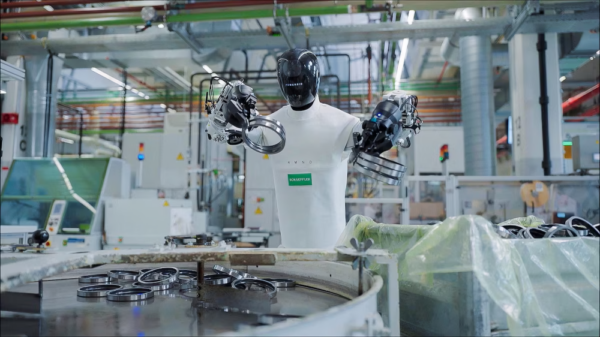
Expanding Beyond Robotics Deployment
In addition to the robot deployment agreement, the two companies signed a separate five-year actuator supply partnership. Under the agreement, Schaeffler will become Humanoid’s preferred supplier for more than half of the company’s joint actuator requirements through 2031. Actuators are critical components responsible for robotic movement and mobility.
Humanoid indicated that the agreement is expected to involve a seven-digit volume of actuators over the contract period, suggesting deliveries exceeding one million units. The deal demonstrates how humanoid robotics companies are increasingly building long-term supply chain ecosystems alongside deployment partnerships.
Manufacturing Industry Accelerates Humanoid Adoption
The partnership builds upon a strategic technology collaboration announced earlier in 2026 and reflects growing interest in humanoid robots for repetitive industrial tasks. Manufacturers worldwide are exploring robotic systems capable of handling material transport, warehouse logistics, line feeding, inspection, and production support activities.
Industry momentum continues to grow as companies search for solutions to labor shortages, workforce aging, and productivity challenges. Similar initiatives are emerging across Europe, North America, and Asia as organizations increasingly invest in physical AI and robotic workforce technologies.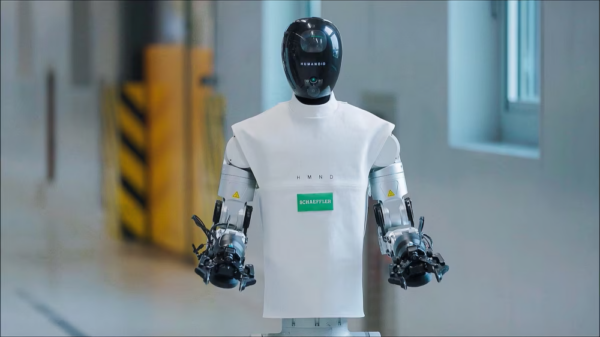
The Rise of Robot-as-a-Service in Manufacturing
Industry reports indicate that the Humanoid-Schaeffler agreement is structured around a Robot-as-a-Service (RaaS) model. Rather than purchasing robots as capital equipment, manufacturers can access robotic labor through ongoing service agreements that include fleet management, maintenance, software updates, and operational support.
This model lowers upfront investment requirements while enabling companies to scale automation more flexibly. It also shifts part of the operational and maintenance responsibility to robotics providers, creating a potentially faster path toward industrial adoption.
Europe Positions Itself in the Humanoid Robotics Race
Schaeffler has been actively expanding its involvement in humanoid robotics and motion technologies. The company recently stated that it expects humanoid robotics orders to reach several hundred million euros by 2030, supported by collaborations with dozens of robotics companies globally.
The company views humanoid robotics as a major future growth market, particularly in areas such as actuators, motion systems, and precision mechanical components. With manufacturers expected to produce more than one million humanoid robots globally between 2026 and 2030, suppliers are positioning themselves to capture emerging demand across the sector.
Industry Challenges Remain Despite Growing Momentum
While large-scale deployment announcements are becoming more common, experts caution that widespread adoption still faces technical and operational hurdles. Industry discussions continue around battery life, safety standards, reliability, uptime, autonomy levels, and integration with existing factory systems.


 Share your Details for subscribe