



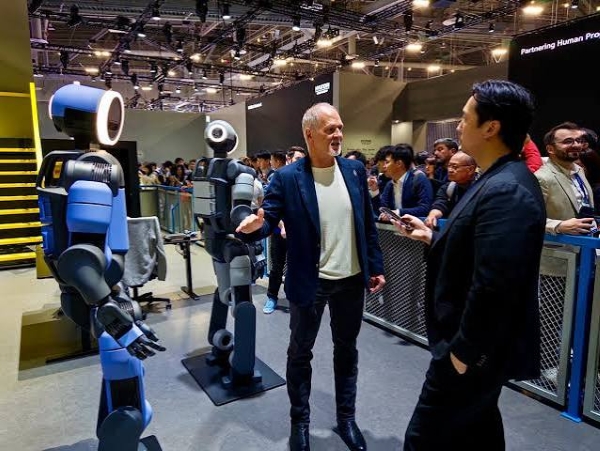
What if the next major breakthrough in semiconductor manufacturing does not come from a new production machine, but from a robot capable of navigating the factory floor, inspecting equipment, and performing tasks alongside human workers?
That possibility is moving closer to reality as Boston Dynamics and GlobalFoundries expand their collaboration to explore the role of humanoid robots in semiconductor manufacturing. Announced on November 17, 2026, the partnership represents an important development at the intersection of artificial intelligence, robotics, and advanced industrial automation. GlobalFoundries is expanding its use of Boston Dynamics’ autonomous Spot robots while preparing to test its humanoid Atlas robot through an early adopter program.
The development reflects a broader transformation underway across the American technology industry: artificial intelligence is moving beyond computers and software applications into the physical environmentswhere products are designed and manufactured.
From Autonomous Inspections to Humanoid Robotics
Robotics has already established an important role in industrial environments, particularly in operations requiring precision, consistency, and continuous monitoring. However, the introduction of humanoid robots could open an entirely new chapter for manufacturing facilities.
GlobalFoundries has been using Boston Dynamics’ Spot quadruped robots to support inspections across its manufacturing operations. These robots can navigate industrial environments, collect visual information, and assist facility teams with monitoring equipment and identifying potential operational issues.
According to the companies’ announcement, two Spot robots at GlobalFoundries’ Singapore facility have travelled nearly 900 kilometres since April and completed more than 90,000 inspections in sub-fab areas. The deployment reportedly achieved a 99% mission success rate. Building on this experience, GlobalFoundries is participating in Boston Dynamics’ Atlas humanoid early adopter program, becoming the first semiconductor manufacturer outside the automotive industry to join the initiative.
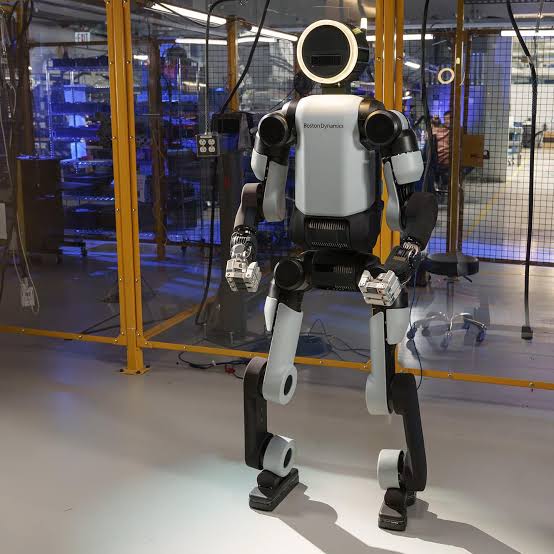
Initial Atlas testing is expected to begin in early 2027 at GlobalFoundries facilities. The objective is to explore how humanoid robots can operate in complex industrial environments, evaluate their integration requirements, and identify practical applications within semiconductor manufacturing.
Why Physical AI Is Becoming Important for Manufacturing
One of the most significant developments behind this partnership is the growing importance of Physical AI.Unlike traditional AI applications that primarily process information through digital systems, Physical AI enables intelligent machines to understand and interact with the physical world. It combines artificial intelligence, computer vision, sensors, robotics, and autonomous decision-making.
For semiconductor manufacturers, this technology could create opportunities across several operational areas.
- Predictive Maintenance: Robots equipped with advanced sensors and vision systems can collect operational data and help identify equipment abnormalities before they develop into major failures.
- Industrial Safety: Autonomous robots can support inspections in difficult-to-access environments, potentially reducing the need for employees to enter certain hazardous areas.
- Manufacturing Efficiency: Automated inspections can improve consistency, reduce repetitive workloads, and allow engineering teams to concentrate on more complex activities.
- Human-Robot Collaboration: Humanoid robots could eventually support tasks in environments originally designed around human movement and existing industrial workflows.
Although these applications are promising, humanoid robotics in semiconductor production remains at an early stage. Real-world testing will be essential to determine where the technology can deliver measurable operational value.
The Bigger Picture: Robotics Meets the Semiconductor Industry
The semiconductor industry plays a critical role in the development of nearly every major technology sector, from artificial intelligence and cloud computing to electric vehicles and advanced industrial systems.As demand for computing power and advanced chips increases, manufacturers are under growing pressure to improve production efficiency, operational reliability, and manufacturing capabilities.
This creates an opportunity for robotics companies to become increasingly important partners in the semiconductor ecosystem.The collaboration between Boston Dynamics and GlobalFoundries demonstrates how robotics can move beyond traditional manufacturing applications and enter highly specialized industrial environments.
It also highlights the potential for American technology companies to combine semiconductor expertise with intelligent automation to develop more advanced manufacturing operations.
What This Means for the Future of the U.S. Workforce
The expansion of robotics in manufacturing also raises an important question: how will the relationship between people and machines evolve?
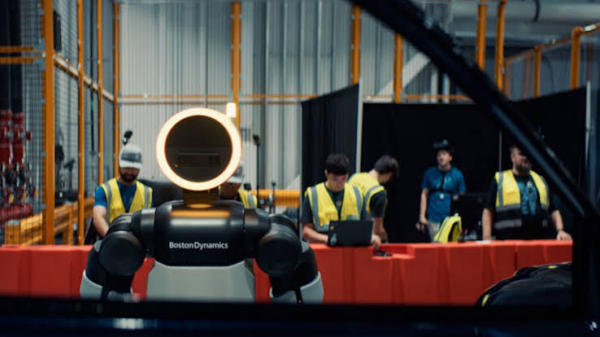
The introduction of humanoid robots does not automatically mean that human workers will be replaced. Instead, the immediate opportunity lies in exploring how intelligent machines can support repetitive inspections, assist with monitoring, and operate in environments where automation could improve safety and consistency.At the same time, the transition will create demand for professionals with expertise in robotics engineering, artificial intelligence, computer vision, industrial automation, semiconductor technology, and intelligent manufacturing systems.
For American businesses, investing in these capabilities could become an important factor in remaining competitive as industrial technologies continue to evolve.
UNI Network Group Perspective: The Future of Manufacturing Is Intelligent
The Boston Dynamics and GlobalFoundries collaboration represents more than another robotics announcement. It offers a glimpse into how Physical AI could influence the next generation of American manufacturing.
The convergence of humanoid robotics, semiconductor technology, and artificial intelligence is creating new possibilities for industrial operations. While widespread adoption will require further testing, infrastructure investment, and workforce adaptation, the direction of innovation is becoming increasingly clear.For the United States, the opportunity is significant. Advanced manufacturing will increasingly depend on the ability to integrate intelligent technologies into real-world industrial environments.
The future of manufacturing is no longer just about building smarter machines. It is about making machines intelligent enough to work in the world around us.


 Share your Details for subscribe