



Kawasaki Heavy Industries is reportedly partnering with NVIDIA to establish a joint robotics and physical AI development center in San Jose, according to reports published by Reuters and Nikkei. The initiative represents a significant step in accelerating the integration of robotics, simulation technologies, and artificial intelligence for real-world industrial and mobility applications.
The planned center will be located in Silicon Valley and is expected to focus initially on robotics solutions for medical and mobility sectors. The collaboration reflects growing global investment in “physical AI,” where artificial intelligence is embedded into machines capable of interacting autonomously with real-world environments.
Physical AI Becomes a Strategic Robotics Priority
The partnership highlights the rapid convergence of AI, robotics, and industrial automation as companies race to commercialize intelligent machines capable of real-world decision-making and autonomous movement.
According to reports, Nvidia’s simulation and AI technologies will be integrated into Kawasaki Heavy Industries’ developing Corleo platform, a four-legged personal mobility robot designed for advanced transportation and mobility applications. Nvidia’s digital simulation ecosystem is expected to support virtual testing, training, and optimization of robotic systems before physical deployment.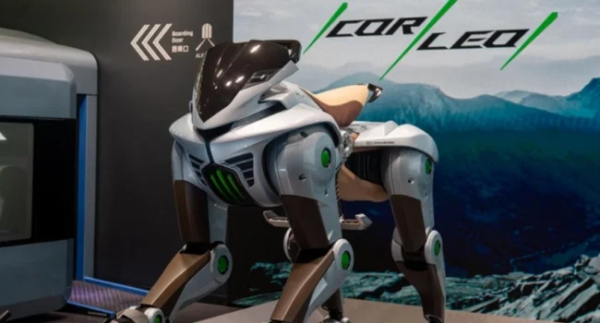
Industry analysts note that simulation-based AI training has become increasingly important in robotics development, enabling faster iteration cycles, reduced hardware testing costs, and safer deployment environments.
Multi-Company Collaboration Expands the Ecosystem
In addition to Nvidia, the development center is expected to involve collaborations with Analog Devices, Microsoft, and Fujitsu. The multi-company structure indicates a broader ecosystem approach aimed at combining AI infrastructure, semiconductors, cloud computing, and industrial engineering expertise.
The participation of multiple technology firms reflects how advanced robotics development increasingly depends on cross-industry collaboration spanning hardware, AI software, cloud platforms, sensors, and edge computing systems.
Reports also suggest the center may eventually expand beyond mobility into healthcare, manufacturing, semiconductors, and industrial automation applications.
Silicon Valley Emerging as a Physical AI Hub
The decision to establish the development center in Silicon Valley underscores the region’s growing role as a global hub for robotics, embodied AI, and autonomous systems research. Technology companies are increasingly investing in robotics as the next major frontier beyond generative AI and software-based intelligence.
The broader robotics sector is experiencing accelerating investment as industries seek automation solutions for labor shortages, manufacturing efficiency, healthcare support, logistics, and autonomous mobility systems.
Market discussions across technology and investor communities increasingly view robotics as the next major growth cycle following the AI semiconductor boom, with Nvidia positioned as a key infrastructure provider for both AI computing and robotic intelligence systems.
Strategic Importance for Global Robotics Innovation
The Kawasaki-Nvidia initiative highlights Japan’s continued leadership in industrial robotics combined with Silicon Valley’s dominance in AI computing and software infrastructure. The collaboration could strengthen Japan-U.S. cooperation in next-generation automation technologies while accelerating commercialization of intelligent robotic systems.
For Nvidia, the partnership further expands its growing influence in physical AI and robotics ecosystems beyond traditional data center and generative AI markets. The company has increasingly positioned its AI platforms, simulation tools, and edge computing systems as foundational infrastructure for autonomous machines and embodied AI applications.
Meanwhile, Kawasaki Heavy Industries continues diversifying its robotics and mobility portfolio as demand for AI-enabled automation rises across industries worldwide.
Future of Robotics and Embodied AI
The planned robotics center reflects a broader transformation underway in the global technology industry, where AI is moving from purely digital environments into physical systems capable of interacting with people, infrastructure, and industrial environments.
From healthcare robotics and smart mobility to industrial automation and autonomous machines, physical AI is expected to become a major driver of future innovation and economic growth over the coming decade.
If successfully developed, the collaboration between Kawasaki Heavy Industries, Nvidia, and its technology partners could contribute significantly to shaping the next generation of intelligent robotics platforms operating in real-world environments.


 Share your Details for subscribe