


Teaching Robots to Understand Human Language: An Exclusive Conversation with Sebastian Peralta
The future of robotics lies in combining classical robotics with generative AI and agentic systems.
July 3 , 2026

An Exclusive Interview with Sebastian Peralta,
CEO & Co-Founder | MBodi AI (Robotics & AI Automation)
KEY TAKEAWAYS
- MBodi AI is building a new robotics paradigm where robots learn skills through natural language instead of manual programming.
- The biggest barrier in robotics today is not hardware-but scalability, flexibility, and cost efficiency of software systems.
- Industrial robotics must balance three critical factors: speed, affordability, and adaptability to high-variability tasks.
- The future of robotics lies in combining classical robotics with generative AI and agentic systems.
- Enterprises are increasingly shifting toward automation that reduces engineering dependency and enables faster deployment.
As robotics and generative AI begin to converge, the manufacturing and logistics industries are entering a new era of transformation-one where robots are no longer limited by rigid programming, but instead learn, adapt, and execute tasks through natural language and intelligent systems.
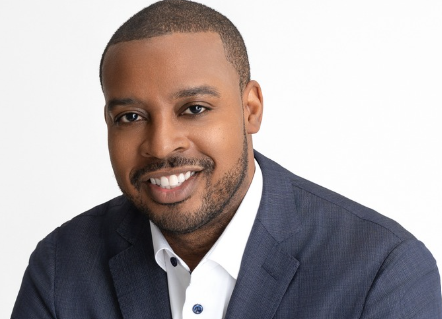
At the forefront of this shift is Sebastian Peralta, CEO and Co-founder of MBodi AI, a startup building next-generation robotics software that enables factory workers to teach robots new skills simply by speaking to them.
In this exclusive conversation with UNI Network Group at Automate 2026, Sebastian shares his journey from Google and academic research in deep learning robotics to founding MBodi AI, the challenges of scaling robotics startups, and how agentic AI is reshaping industrial automation.
He also discusses winning the ABB Global AI Startup Challenge, working with Fortune 100 companies, and the future of robotics where flexibility, intelligence, and human-like adaptability redefine how machines operate in real-world environments.
At Automate 2026, UNI Network Group had the opportunity to speak with Sebastian Peralta, CEO of MBodi AI, about the evolution of robotics, startup challenges, enterprise adoption, and the future of AI-driven automation.
Q1. Congratulations on your win at Automate 2026. To begin with, could you introduce yourself and MBodi AI?
Ans. Thank you, I really appreciate it.My name is Sebastian, and I’m the CEO and Co-founder of MBodi AI. My journey into robotics started during my undergraduate studies when I became fascinated by the gap between what large language models could do and what robots were capable of at the time. That curiosity led me into deep learning robotics research at the University of Pennsylvania’s GRASP Lab, followed by engineering and research work at Google.
After ChatGPT was released, I realized how transformative natural language could be for robotics. That’s when I decided to leave my role and start MBodi AI.At MBodi, we are building AI software that allows factory workers and operators to teach robots new skills simply by speaking or demonstrating tasks-without needing traditional programming.

Q2. What inspired you to start MBodi AI?
Ans. The idea came from a strong conviction that robotics was being built in a fundamentally inefficient way.I believed that if robots are to scale globally, they need to become easier to program, more flexible, and more aligned with how humans naturally communicate.
Traditional robotics requires highly specialized engineers to manually program every task. That approach does not scale in dynamic industrial environments.MBodi AI was created to change that-by making robotics more human-centric, intuitive, and scalable using natural language and AI-driven instruction.
Q3.What are the biggest challenges in robotics today?
Ans. obotics today struggles with scalability.Unlike SaaS software, robotics competes directly with human labor, which means it must meet extremely high expectations in speed, flexibility, and cost efficiency.
We often describe it as a “triangle problem”:
1. Robots must be fast enough to match human speed impact
2. Flexible enough to handle thousands of changing SKUs and tasks
3.And affordable enough to replace or complement human labor
The challenge is that every time a robot needs to perform a new task, it often requires weeks or months of engineering effort. That limits scalability significantly.
Q4. What were the early challenges you faced while building MBodi AI?
Ans. There were challenges at every stage.One major challenge was industry sentiment. Robotics has a history of high expectations and limited commercial scalability, which made investors cautious.Another challenge was product direction. Initially, I believed we could build a software infrastructure layer for robotics engineers. However, we quickly realized that roboticists and integrators don’t adopt SaaS tools the same way software engineers do-they tend to build everything themselves.
That learning forced us to rethink our approach and focus more directly on real-world deployment and practical use cases.Winning the ABB Global AI Startup Challenge was a turning point for us, as it validated our approach to combining natural language with robotics.

Q5. How do you handle customer hesitation and trust issues around robotics and AI?
Ans. This is a very real challenge Some people are naturally cautious or even afraid of AI and robotics-especially concerns around job displacement and safety. Our approach has been to focus on customers who are already motivated to innovate and remain competitive, particularly Fortune 100 companies.These organizations understand that to stay ahead, they must adopt new technology. So instead of trying to convince skeptics first, we work with forward-looking adopters who want to lead transformation.
Q6. What is MBodi AI’s core solution and how does it work?
Ans. Our system allows robots to learn new skills through natural language instructions or demonstrations.For example, a factory operator can simply explain a task-how to pick an object, how to place it, and how to orient it. The AI system interprets this instruction, converts it into a structured skill, and executes it in real-time.
Once learned, the skill is stored and reused deterministically, meaning the robot can perform it reliably at production speed.This significantly reduces deployment time-from weeks or months to just minutes in some cases.

Q7. How did you acquire your first customers?
Ans. We were fortunate to win ABB Robotics’ Global AI Startup Challenge, which led to a joint commercialization agreement.Through this partnership, we gained access to a Fortune 100 customer for a proof of concept, which later moved into a paid pilot.
Our second major customer, a Fortune 100 pharmaceutical company, came through industry connections and advisory relationships, including engagement with McKinsey.These partnerships helped us move quickly into real industrial deployments.
Q8. Can you explain your partnership model with ABB Robotics?
Ans. ABB provides world-class industrial robotics hardware known for reliability and long-term performance.MBodi AI provides the intelligence layer on top of that hardware.Together, we integrate our AI runtime with ABB’s robotic systems and offer it as a subscription-based software layer-approximately $20K per robot per year.This allows customers to significantly reduce labor costs while improving flexibility and automation capabilities.
Q9.What was your experience at Automate 2026 competition?
Ans. It was a highly competitive environment with many strong robotics startups.The preparation came down to focusing on our core belief-making robotics programmable through natural language and scalable AI systems.We focused on clearly communicating our progress, real-world deployments, and the value we are already delivering to enterprise customers.
Q10. How do you see robotics evolving over the next 5–10 years?
Ans. We are still not at the point where vision-language-action models are ready for large-scale industrial deployment.In the near term, robotics will continue to rely on hybrid systems combining classical robotics with AI-based enhancements.
However, over the next 5–10 years, I believe we will see a major shift toward systems that require far less manual programming and engineering effort.Instead of engineers spending months on-site, we will see systems that can be deployed and configured through intelligent AI interfaces.
Q11. What advice would you give to people entering AI and robotics?
Ans. I would recommend focusing on three areas:
1 First, understand AI agents and how they interact with tools and systems.
2 Second, study how large language models integrate with real-world applications.
3 And third, explore how these systems can eventually extend into physical environments like robotics.
The key idea is that robotics is becoming an extension of AI agents into the physical world.
Q12. Any final message for future innovators?
Ans. The future of robotics is about removing complexity from human-machine interaction.We are moving toward a world where robots are not programmed-they are instructed.The companies and individuals who understand this shift early will define the next generation of industrial automation.
 Editorial Desk






 Share your Details for subscribe