




Introduction
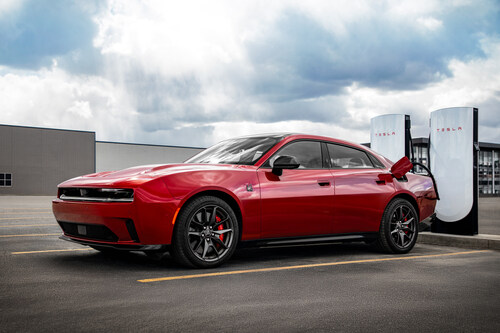
Stellantis has announced a major expansion of its electric vehicle (EV) charging network in North America by enabling its battery-electric vehicle (BEV) customers to access the Tesla Supercharger network. This move significantly enhances charging convenience and supports long-distance travel for EV users across multiple Stellantis brands.
Strengthening EV Charging Infrastructure
As the adoption of electric vehicles accelerates, access to reliable and widespread charging infrastructure remains a critical factor. Stellantis’ integration with Tesla’s Supercharger network marks a key milestone in improving charging accessibility and interoperability across platforms.
The initiative allows customers from brands such as Dodge, Jeep, Ram, FIAT, and Maserati to tap into one of the largest fast-charging networks in the region.
Operational Details: Seamless Charging Experience
Starting immediately, Stellantis BEV owners can access Tesla V3 and V4 Superchargers using a Free2move Charge North American Charging System (NACS)-CCS1 DC adapter. The adapter is available through certified dealerships and online platforms.
Additionally, Tesla’s “Magic Dock” Superchargers—equipped with built-in adapters—offer direct compatibility for supported vehicles. Stellantis emphasizes that only approved adapters should be used to ensure safety and optimal performance.
The free Free2move Charge app further simplifies the experience by enabling users to locate compatible charging stations, manage sessions, and handle payments seamlessly.
Compatible Vehicles and Future Integration
The expanded charging access applies to several current and upcoming BEV models, including:
- Dodge Charger Daytona (2024–2026)
- Jeep Wagoneer S (2024–2025)
- Jeep Recon (2026)
- Ram ProMaster EV (2024–2026)
- FIAT 500e (2024–2026)
- Maserati Folgore lineup (2024–2026)
Looking ahead, the 2027 Dodge Charger Daytona will be the first Stellantis model equipped with a native NACS charging port, eliminating the need for an adapter when using Tesla Superchargers.
Economic Impact: Driving EV Adoption
By expanding access to over 27,500 charging points, Stellantis is addressing one of the biggest barriers to EV adoption—range anxiety. Improved charging convenience is expected to boost consumer confidence and accelerate the transition to electric mobility.
This move also aligns with broader industry efforts to standardize charging technologies, ultimately reducing infrastructure fragmentation and improving efficiency across the EV ecosystem.


 Share your Details for subscribe