



Artificial intelligence is no longer limited to writing, research, software development and administrative tasks. As autonomous machines become more capable of navigating physical environments and performing manual activities, the potential impact of automation is expanding into transportation, agriculture, warehousing and industrial operations.
In a report published on September 30, 2026, Anthropic, the company behind Claude, examined which tasks robots can perform with existing technology and how robotic capabilities overlap with the work people do. The findings suggest that combining robotics with large language models (LLMs) could expose a substantially wider range of occupations to technological change than AI software alone.
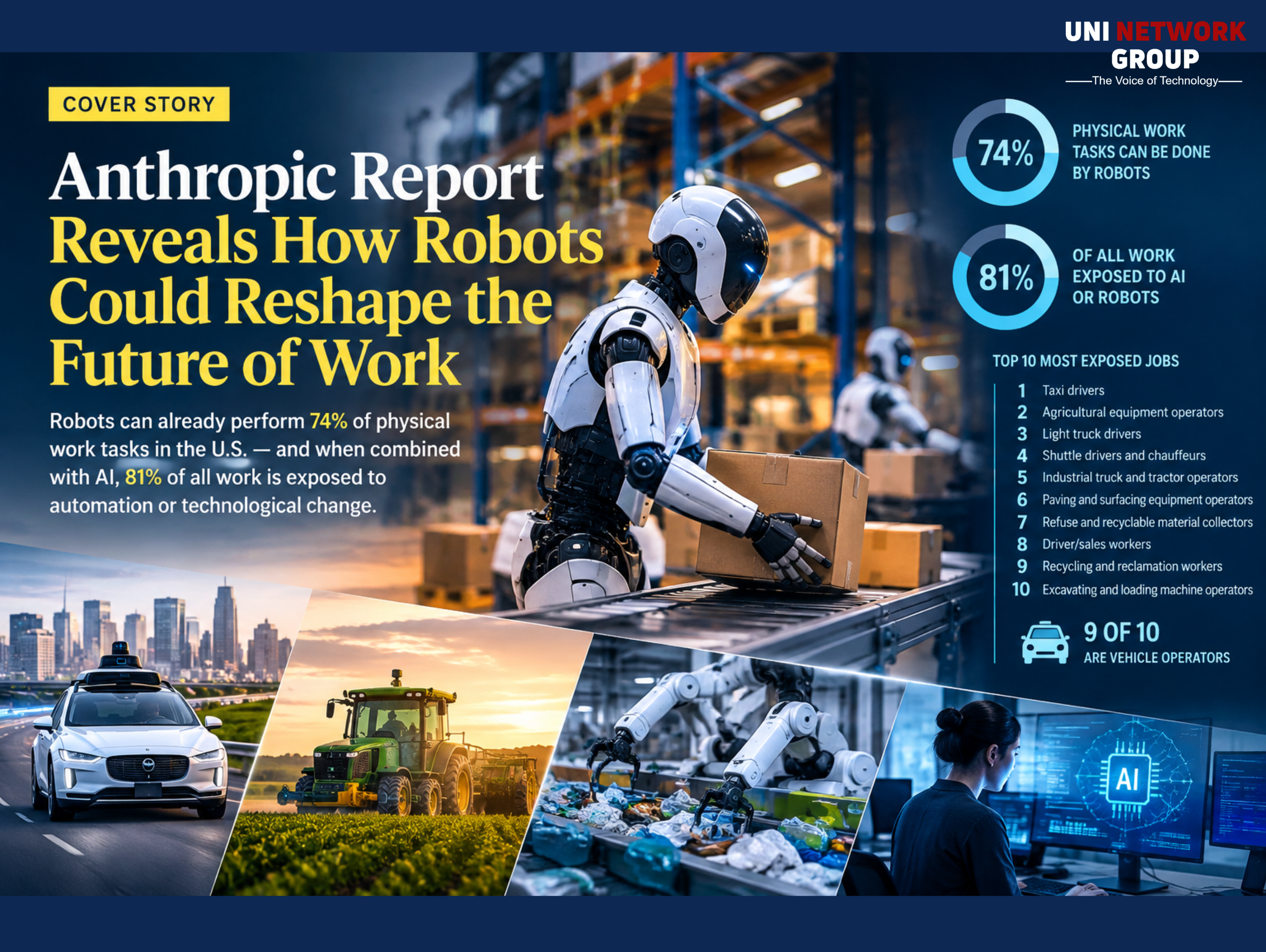
The report estimates that robots can perform 74% of physical work tasks in the United States in at least some settings. When robot capabilities are considered alongside LLMs, approximately 81% of work, measured by time spent on tasks, is exposed to one or both technologies. However, technological exposure does not automatically mean that a job will disappear.
Vehicle Operators Face High Robotic Exposure
One of the report’s most striking findings is the concentration of vehicle-related occupations among the jobs most exposed to existing robotic capabilities.
Nine of the ten most exposed occupations are vehicle operators. These include taxi drivers, agricultural equipment operators, light truck drivers, shuttle drivers and chauffeurs, industrial truck and tractor operators, paving and surfacing equipment operators, refuse and recyclable material collectors, driver/sales workers, and recycling and reclamation workers.
The findings reflect progress in autonomous vehicles, agricultural machinery, industrial transport systems and robotic material handling. Autonomous vehicles can perform certain driving tasks, while automated tractors and industrial machines can handle specific activities in controlled or well-defined operating environments.
Recycling operations provide another example. Computer vision systems and robotic grippers can identify and sort selected materials, potentially reducing the need for workers to perform repetitive sorting tasks manually.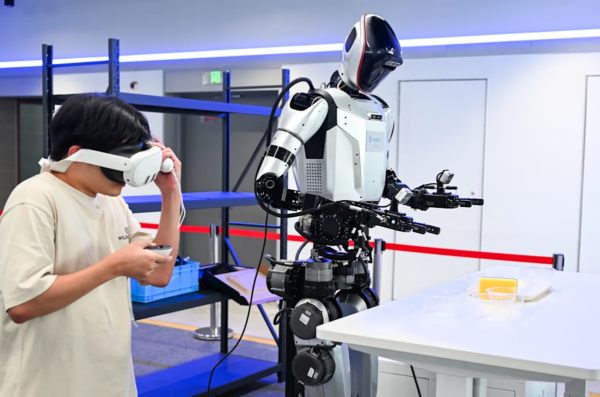
These technologies do not yet perform every responsibility associated with the occupations. Driving jobs, for instance, can also involve customer interaction, vehicle maintenance, judgment and handling unexpected situations. Nevertheless, the report identifies these roles as areas where existing technology already overlaps with a substantial share of the work.
Why Robots Change the AI Exposure Picture
Anthropic’s earlier research on labor-market exposure examined the capabilities of large language models and their potential applications across occupations. That analysis found substantial theoretical exposure in computer and mathematical occupations, office and administrative support, legal work, and business and financial services.
The new robotics study adds another dimension: the ability to perform physical tasks.
With LLMs alone, transportation and material-moving work has relatively low exposure, at less than 15% in Anthropic’s comparison. When robots are included, exposure in the transportation and moving category rises to approximately 90%.
This difference illustrates why AI software and robotics should not be treated as interchangeable technologies. Language models can assist with information processing, writing, analysis and decision-making, while autonomous machines can carry out physical actions such as driving, moving materials and operating equipment.
Their capabilities may overlap in some applications, but their combined reach extends to tasks that either technology would struggle to address independently. The figures describe potential task exposure, not a forecast that 90% of transportation jobs will be eliminated.
Administrative and Professional Work Remains Exposed to AI
Robotics expands the range of potentially affected jobs, but language models alone continue to have significant relevance for knowledge-based occupations.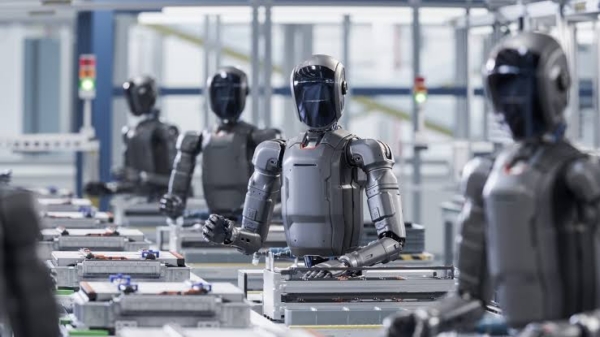
Anthropic’s comparison identifies office and administrative support, management, business and financial operations, computer and mathematical work, legal services, science, architecture and engineering, arts and media, healthcare practitioners, and education among occupational groups with meaningful LLM exposure.
These occupations often involve activities such as preparing documents, analyzing information, developing software, reviewing records, producing content and supporting decisions. AI tools can assist with portions of these responsibilities, although the extent of practical adoption varies by task and workplace.
The distinction is important: exposure does not necessarily indicate that a technology can independently complete an entire job. Many professional roles combine technical responsibilities with accountability, interpersonal communication, specialized judgment and decisions that require human oversight.
The report’s broader implication is that automation is not confined to either office work or physical labor. Different technologies affect different tasks, and their combined impact varies across occupations.
Nursing, Repair and Personal Care Present Different Challenges
Not every occupation is equally exposed to current robotic capabilities.
Anthropic identifies nursing and general repair work among examples where robots currently have limited ability to perform the relevant tasks, even in relatively controlled environments. Personal care and other activities requiring close human interaction also present significant challenges.
These jobs can demand dexterity, adaptability, physical judgment and the ability to respond to unpredictable situations. Healthcare and personal care additionally involve trust, communication and human relationships that are difficult to replicate through automation alone.
However, lower exposure does not mean that these occupations will remain untouched by technology. AI software may still support documentation, scheduling, information retrieval and other tasks associated with them. The findings instead suggest that current robots have greater difficulty replacing their physical and interpersonal components.
The Biggest Barrier Is Not Capability Alone
Despite the breadth of tasks robots can perform, Anthropic highlights a major limitation: cost.
The report estimates that robots are cost-competitive with human labor for just 0.3% of job tasks today. In other words, being technically capable of performing a task does not necessarily make a robot an economically attractive replacement for a worker.
Deployment costs can include equipment purchases, installation, maintenance, energy, supervision and the expense of adapting workplaces. Many robots also require structured environments and struggle with irregular objects, fine motor tasks and unexpected conditions.
Regulations and human preferences can create additional barriers, particularly in settings where safety, trust or direct interpersonal contact are essential.
Consequently, the report distinguishes between three questions: whether a robot can perform a task, whether it can do so in the conditions where the task occurs, and whether deploying it is economically practical. These factors help explain why widespread technical exposure has not translated into equally widespread job replacement.
What the Findings Mean for Employers and Workers
For businesses, the research highlights the importance of evaluating automation at the task level rather than assuming that entire occupations will be replaced at once.
In manufacturing and logistics, companies may begin by automating repetitive material movement, sorting, inspection or equipment operation. In transportation, autonomous systems may affect particular routes and operating conditions before they become suitable for broader deployment. Professional services may see continued integration of AI into research, documentation and analytical workflows.
For workers, the findings reinforce the value of combining technical knowledge with capabilities that remain difficult to automate. These can include complex problem-solving, adaptability, equipment maintenance, interpersonal communication, supervision and the ability to manage exceptions when automated systems encounter unfamiliar situations.
Employers will also need to consider workforce training, operational safety and how human responsibilities evolve as machines take over selected tasks.
The report does not establish a definitive timeline for these changes. Adoption will depend on technological progress, costs, infrastructure, regulation and the practical needs of individual industries.
The Future of Work Will Depend on How AI and Robotics Converge
Anthropic’s research points to a broader shift in the automation debate. The question is no longer only which information-based tasks AI can support, but also which physical activities autonomous machines can perform reliably and affordably.
The findings suggest that transportation, warehousing and other equipment-intensive operations deserve close attention because robots already demonstrate capabilities relevant to their work. Meanwhile, professional occupations remain exposed to language-model applications, and human-centered jobs continue to face limitations related to physical dexterity, interpersonal needs and unpredictable environments.
The central distinction is between what technology can do and what organizations can realistically deploy. Robots may already be capable of performing many physical tasks in specific circumstances, but cost and operational constraints remain substantial barriers.
As AI systems and autonomous machines continue to develop, the effects on employment are likely to vary by task, occupation and industry. Understanding those differences will be essential for businesses planning automation strategies and workers preparing for changes in the workplace.
Source: Anthropic, What work can robots do?, published September 30, 2026. Research by Russell Legate-Yang and Maxim Massenkoff.


 Share your Details for subscribe