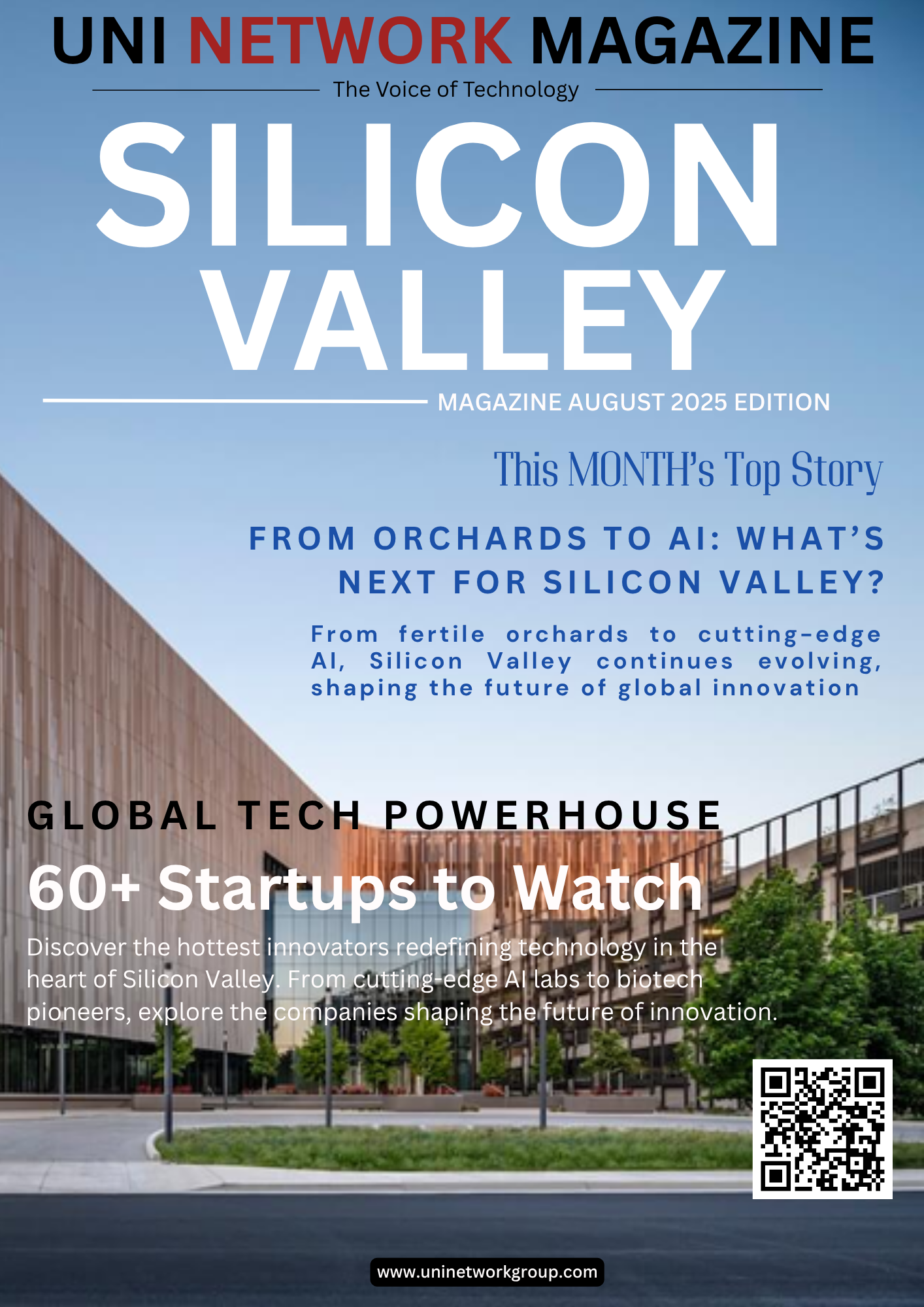
Magazine 1

Magazine

Magazine 2

Magazine

Magazine 3

Magazine

Magazine 4

Magazine

Magazine 5

Magazine

Magazine 6

Magazine

Genesis Motor America has been awarded the prestigious Corporate Impact Award by the Los Angeles Fire Department (LAFD) Foundation during the annual VALOR Awards ceremony at Dodger Stadium. The recognition highlights Genesis’ significant contribution of 50 vehicles to support wildfire recovery and enhance the department’s non-emergency transportation capabilities. Community Partnership  The 2025 Genesis Invitational, relocated from its traditional venue due…

Read More
Rotated Image
icon

Customer Stories

ACADEMIA & INDUSTRY

Helix by Figure: The Future of Robotics with Vision-Language-Action Models

Helix combines vision, language understanding, and action control to advance AI and robotics

Editorial Desk

Interview

ACADEMIA & INDUSTRY

UpClose with AI thought leader & Futurist Zack Kass

A candid conversation with AI futurist Zack Kass on the future of technology.
Editorial Desk
WOMEN SPECIAL

The Gender Gap in Tech: Why Are There So Few Women in Coding?

A study by Dr. Siân Brooke (LSE) explores gender disparity in coding, its causes, and its impact on tech innovation
Editorial Desk
CUSTOMER STORIES

How Snowflake’s New CEO Plans to Scale the $50.96B Giant

Snowflake CEO Sridhar Ramaswamy shares his plan to scale the $50.96B giant.
Editorial Desk
AI & ROBOTICS

Setting the standard for responsible and impactful AI

Discussing how to build AI systems that are responsible and impactful...
Editorial Desk
INTERVIEW

Lowe’s talent stack is shaping the future of omnichannel retail

A look at Lowe’s innovative approach to omnichannel retail...
Editorial Desk
ACADEMIA & INDUSTRY

Figure Unveils BotQ: The World's Largest Humanoid Production Line

Figure is set to revolutionize the robotics industry with BotQ...
Editorial Desk
ACADEMIA & INDUSTRY

Helix by Figure: The Future of Robotics with Vision-Language-Action Models

Helix represents a groundbreaking step in AI and robotics...
Editorial Desk

Explore

Expert Knowledge Hub -Insights & Thought Leadership

NADADATA

Midyear Report

Auto Sales 2025

Risks in the US

Industry Report

American Automakers

Industry trend

PWC Report

Robotic Industry

Association Report

Technology Trend

McKinsey Digital

Quantum technology

McKinsey Digital

Discover More

On September 25, 2015, during its 70th Session, the United Nations General Assembly adopted the transformative document “Transforming our World: The 2030 Agenda for Sustainable Development.” This groundbreaking agenda introduced 17 Sustainable Development Goals (SDGs) and 169 associated targets, providing a holistic framework that integrates social, economic, and environmental dimensions of development.

Among these ambitious goals, Goal 7 was dedicated to ensuring access to affordable, reliable, sustainable, and modern energy for all. Recognizing that energy is a lifeline for millions deprived of opportunities, Goal 7 focuses on promoting clean, safe cooking fuels, improving energy efficiency, increasing the use of renewable sources, and advancing modern energy systems. Renewable resources like wind, water, solar, biomass, and geothermal energy are infinite and offer clean alternatives to traditional energy sources.

Targets Under Goal 7: Aiming for Change by 2030

The agenda sets specific targets under Goal 7 to ensure progress:

  1. Universal Access: Ensure universal access to affordable, reliable, and modern energy services by 2030.
  2. Renewable Energy: Substantially increase the share of renewable energy in the global energy mix by 2030.
  3. Energy Efficiency: Double the global rate of improvement in energy efficiency by 2030.
  4. International Collaboration: Enhance global cooperation to facilitate access to clean energy research and technology, renewable energy systems, energy efficiency solutions, and cleaner fossil-fuel technologies. The focus includes investments in energy infrastructure and clean energy technologies.
  5. Infrastructure Development: Expand infrastructure and upgrade technology to provide modern, sustainable energy services to developing countries, particularly least-developed countries, small island nations, and land-locked countries.

Harnessing Sustainable Energy

Goal 7 underscores the critical role of sustainable energy systems in fostering development and combating climate change. This effort builds on previous discussions around renewable energy resources, shedding light on how these clean alternatives can pave the way toward a greener future.

The pursuit of sustainable energy is not just an environmental necessity—it is a commitment to equity, innovation, and a brighter future for all.

SANTA CLARA, Calif., Aug. 21, 2024 (GLOBE NEWSWIRE) — Today, AMD (NASDAQ: AMD) published its annual Corporate Responsibility (CR) Report, detailing progress toward its strategic Corporate Responsibility goals in 2023. AMD focuses its efforts on key issues that have the greatest impact on its business and society, determined through an ESG materiality assessment1, including environmental sustainability; digital impact; diversity, belonging and inclusion; and supply chain responsibility.

“We are in the midst of a major inflection point in the computing industry, and it is more important than ever to put our values into action and align our efforts with some of the biggest challenges facing our world, including addressing climate change and energy demand, enabling advancements in science and medicine, and respecting human rights,” said Justin Murrill, director of Corporate Responsibility at AMD. “At AMD, we continue to deepen collaboration with partners and peers to address these important issues and responsibly drive our industry forward.”

Key highlights from 2023 include:
Advancing Environmental Sustainability

Accelerating Scientific Research and STEM Education

Empowering People and Communities

Collaborating Across the Value Chain

To learn more about these and other Corporate Responsibility updates, explore the full 2023-24 CR Report here.

AMD prepared this year’s report in accordance with the Global Reporting Initiative (GRI) Standards. In addition, the report includes climate-related disclosures included in the recommendations of the Taskforce on Climate-Related Financial Disclosures (TCFD) as well as relevant disclosures in applicable Sustainability Accounting Standards Board (SASB) Standards. AMD also annually reports to CDP on climate change and water, as well as reporting on how AMD is making progress in alignment with the UN Sustainable Development Goals.

Supporting Resources

About AMD
For more than 50 years AMD has driven innovation in high-performance computing, graphics and visualization technologies. Billions of people, leading Fortune 500 businesses and cutting-edge scientific research institutions around the world rely on AMD technology daily to improve how they live, work and play. AMD employees are focused on building leadership high-performance and adaptive products that push the boundaries of what is possible. For more information about how AMD is enabling today and inspiring tomorrow, visit the AMD (NASDAQ: AMD) website, blog, LinkedIn and X pages.


1 We include certain disclosures, reports, and information on various environmental, social, and corporate responsibility-related matters on our website (collectively, our “ESG Materials”). Our ESG Materials may contain information that is significant; however, any significance should not be read as necessarily rising to the level of the definition of materiality used for the purposes of our compliance with reporting requirements, including the U.S. federal securities laws, even where we use the word “material” or “materiality” in our ESG Materials (including where we use it in connection with our materiality assessment) or in other materials issued in connection with the matters discussed in our ESG Materials. We have used definitions of materiality in the course of creating our ESG Materials and the goals and metrics discussed therein that do not coincide with or rise to the level of the definition of materiality used for the purposes of our compliance with the U.S. federal securities laws. Moreover, given the uncertainties, estimates, and assumptions inherent in the matters discussed in our ESG Materials, and the timelines involved, materiality is inherently difficult to assess far in advance. In addition, given the inherent uncertainty of the estimates, assumptions and timelines associated with the matters discussed in our ESG Materials, we may not be able to anticipate in advance whether or the degree to which we will or will not be able to meet our plans, targets or goals.
2 AMD estimation based on defect density (defects per unit area on the wafer), chip area and n-factor (manufacturing complexity factor) to estimate the number of wafers avoided in one year. Yield = (1 + A*D0)^(-n) where A is the chip area, D0 is the defect density and n is the complexity factor. The area is known from our design, D0 is known based our manufacturing yield data, and n is a number provided by a foundry partner for a given technology. The calculations are not meant to be precise, since chip design can have a large influence on yield, but it estimates the area impact on yield. The carbon emission estimates of 132,064 mtCO2e were calculated using the estimated number of 5 nm wafers saved in one year, based on the TechInsights’ Semiconductor Manufacturing Carbon Model. Comparison to AMD corporate footprint is based on AMD reported scope 1 and 2 market-based GHG emissions in 2023: 46,606 mtCO2e. Water savings estimates of 1,110 million liters were calculated using the estimated number of 5 nm wafers saved in one year times the amount of water use per 300mm wafer mask layer times the average number of mask layers. Comparison to AMD corporate water use is based on AMD 2023 reported value of 225 million liters.
3 SP5TCO-022B: As of 02/28/2023 based on AMD Internal analysis using the AMD EPYC™ Bare Metal Server & Greenhouse Gas Emission TCO Estimation Tool – version 8.22, estimating the cost and quantity of 2P AMD EPYC™ 9654 (96 core/CPU) powered server versus 2P Intel® Xeon® Platinum 8130 (28 core/CPU) based server solutions required to deliver 380 total virtual machines (VM), requiring 1 core and 8GB of memory per VM.
Environmental impact estimates made leveraging this data, using the Country / Region specific electricity factors from the ‘2020 Grid Electricity Emissions Factors v1.4 – September 2020’, and the United States Environmental Protection Agency ‘Greenhouse Gas Equivalencies Calculator’.
This scenario contains many assumptions and estimates and, while based on AMD internal research and best approximations, should be considered an example for information purposes only, and not used as a basis for decision making over actual testing.
For additional details, see https://www.amd.com/en/claims/epyc4#SP5TCO-022B.
4 The time period for the Digital Impact goal includes donations made after January 1, 2020 and initiated by December 31, 2025. “Initiated” is defined as AMD and the recipient organization reaching an agreement on an AMD donation, which must be delivered by July 30, 2026. Reported data includes: direct beneficiaries defined as students, faculty, or researchers with direct access to AMD-donated technology, funding, or volunteers; and indirect beneficiaries defined as individuals with a reasonable likelihood of receiving research data formulated through AMD-donated technology and potentially gaining useful insights or knowledge. AMD conducts annual surveys with recipient organizations to estimate direct beneficiaries, and in the case of the AI & HPC Fund, indirect beneficiaries as well. To address gaps and/or inconsistencies in survey responses, AMD uses an economic-based impact assumption to estimate the total number of indirect beneficiaries (not applied to direct beneficiaries) by dividing the total market-value of donations in a given years by the total reported indirect beneficiary values from recipients’ surveys for the same year. The data shows the ratio is 1.08 on average for the 3 years of data available (2021, 2022, 2023). Therefore, AMD assumes for every $1M USD of market-value donated, approximately 1.08 million people will indirectly benefit. AMD also assumes that the annual estimated indirect beneficiaries in year 1 continues to reach additional individuals in year 2 and year 3, but at a reduced rate. The impact depreciation rate assumes year 2 beneficiaries amount to 50% of year 1 estimates, and year 3 beneficiaries amount to 25% of year 1 estimates. AMD goal calculations are third-party verified (limited level assurance) based on data supplied by recipient organizations, which is not independently verified by AMD, and AMD economic-based impact models based on data supplied by recipient organizations.
5 AMD calculations are third-party verified (limited level assurance) based on data supplied by our Manufacturing Suppliers, which is not independently verified by AMD.

Polaris Transportation Group is proud to announce the implementation of their comprehensive Sustainability Action Plan. As a leader in North American transportation and logistics, the company aims to create a more sustainable tomorrow by reducing their environmental impact and supporting the communities they touch while continuing to deliver exceptional service.

An innovative family-owned company known as the #CrossBorderPros, Polaris recognizes sustainability as a key component of their long-term business strategy. They are aware of the growing importance of environmental and social responsibility in transportation and choose to be part of the solution.

In 2023, Polaris collaborated with University of Guelph Assistant Dean of Strategic Partnerships & Societal Impact, Professor Audrey Jamal, to create the Polaris Sustainability Action Plan. Together, they established a roadmap with policies meant to benefit the environment as well as their customers, employees, partners and broader community.

Professor Audrey Jamal states, “Polaris came to me with the intention to elevate their already existing eco-friendly practices. We developed a holistic plan highlighting their corporate duties to protect the planet, take care of the people across their company and communities while working with ethical, environmentally conscious partners,” She adds, “It brings me hope to see prominent carriers like Polaris demonstrating this outstanding commitment to their sustainability efforts.”

In alignment with the United Nations’ 17 Sustainable Development Goals, Polaris’ five sustainability pillars focus on their work, employees, planet, community and partners. With an emphasis on hard work ethic and delivering reliable transportation and logistics services, the company intends to operate with integrity by adhering to stringent safety, security and quality standards. As Women’s Trucking Federation of Canada partners, a Top Company for Women to Work in Transportation and Top Fleet Employers of Distinction, they follow exemplary human resources practices that have fostered a diverse and inclusive workplace environment where all employees have equal opportunities to succeed in their careers.

Polaris’ planet-focused initiatives involve reducing greenhouse gas emissions by integrating energy-efficient technologies into their operations. They are investing in energy-saving facility upgrades as well as fuel-efficient equipment and cutting-edge fleet innovations including artificial intelligence and automation for route optimization, digitized administrative processes and streamlined supply chain operations. Utilizing visual asset tracking and fleet management systems, the company monitors driver habits and equipment performance to ensure optimal efficiency on the road. Their partnership with Green Economy Canada will provide them with the necessary resources to monitor the effectiveness of these efforts and identify opportunities for continued improvement.

Through volunteerism and charitable donations to local, national and international humanitarian causes, Polaris is building strong, resilient communities around them. The recent launch of the Polaris Community Care Unit is making an immense difference in the fight against hunger with over 27,000lbs of food and essential items delivered to food banks, shelters and other organizations across the Greater Toronto Area, Southern Ontario and into the USA.

As a transportation and logistics company with a diverse network of partners and suppliers, Polaris solely collaborates with businesses whose operations are entirely ethical and sustainable. Their partners are required to adhere to the same high standards of social and environmental responsibility the company upholds.

Polaris will conduct annual reporting on the progress of these five pillars to hold themselves accountable and review their impact. They recently onboarded a Sustainability Coordinator, Fulya Karakas-Akgun, to oversee the execution of these policies across their operations. Additionally, the company has formed the Polaris Sustainability Task Force, comprised of employees from various departments working together to reach their targets.

Polaris CEO Dave Cox comments, “As Polaris moves towards a more sustainable future, I am deeply passionate about making a positive difference for our people, partners, community and planet. We have a tremendous opportunity to take action, engage and inspire within the supply chain sector. This journey allows us to explore new relationships, actively participate in our communities and contribute meaningfully to environmental wellbeing. Together, we can drive real change.”

With the launch of the multi-faceted Polaris Sustainability Action Plan, the company not only aims to safeguard the future of transportation but also to pave the way for the next generation to enjoy a better tomorrow.

About Polaris Transportation Group

Polaris Transportation is one of Canada’s largest privately held asset-based cross border LTL carriers with daily departures between CAN & the USA. Since 1994, the company has been an award-winning carrier of choice for Fortune 500 companies, 3PLs, global freight forwarders and small to large businesses alike. The Polaris Transportation Group comprises four operating divisions that are not only leading providers of cross border LTL but also global logistics, warehousing and distribution and cutting-edge digital innovation. Leading technology, sustainable growth and a collaborative spirit are hallmarks of the Polaris brand. For more information, please visit www.polaristransport.com.