
TECHNOLOGY & AUTOMATION




February 2026

January 2026

December 2025

November 2025

October 2025

September 2025
August 2025

July 2025

June 2025


Customer Stories
AI & ROBOTICS
Humanoid Robot Accompanies Melania Trump at White House Tech Summit
A jaw-dropping moment as a walking, talking humanoid robot joins Melania Trump at the White House during the international technology summit. Is this the future of AI and human interaction? Watch till the end to see how the robot interacts in a real-world setting.
Interview
WOMEN SPECIAL
The Gender Gap in Tech: Why Are There So Few Women in Coding?
A study by Dr. Siân Brooke (LSE) explores gender disparity in coding, its causes, and its impact on tech innovation
CUSTOMER STORIES
How Snowflake’s New CEO Plans to Scale the $50.96B Giant
Snowflake CEO Sridhar Ramaswamy shares his plan to scale the $50.96B giant.
ROBOTICS & AUTOMATION
Inside a High-Performance ABB Robotics Hall – Where Automation Powers the Future
A fascinating look at advanced ABB industrial robots in action
INTERVIEW
Lowe’s talent stack is shaping the future of omnichannel retail
A look at Lowe’s innovative approach to omnichannel retail...
AI & ROBOTICS
Ubtech’s Walker S2 Enters Full-Scale Industrial Deployment
The AI takeover is no longer sci-fi. Ubtech’s Walker S2 humanoid robots are moving into real factory environments with autonomous battery swapping .
AI & ROBOTICS
Large Behavior Models Power the Next Evolution of Atlas
In a collaboration between Toyota Research Institute (TRI) and Boston Dynamics, researchers are building language-conditioned.

Manufacturing Robotics
An engineer's guide to understanding the state

Sustainable Development Report 2025
Financing the Future

Global Progress Report 2025
Sustainable Banking and Finance Network

Biotech’s Massive Compute Shift
Bio-AI Compute Surge

Global Corporate Sustainability Report 2025
Corporate Sustainability

Grand Challenge R&D Priorities for U.S. Government
AI Inference

Technology Report 2025
AI leaders are extending their edge.

Cloud computing
Cloud Adoption
Sigenergy, a leading innovator in energy technology, unveiled its full portfolio of residential and commercial & industrial (C&I) solutions at Intersolar South America. From high-performance inverters and scalable storage to integrated residential systems, the company’s latest offerings aim to accelerate Latin America’s transition toward energy resilience and independence.
Driving Latin America’s Energy Transition
Latin America faces rising energy demand and growing calls for sustainable solutions. Sigenergy’s expanded product range responds directly to these challenges, delivering scalable systems that enhance grid reliability while reducing costs. By showcasing its technology at Intersolar, Sigenergy is reinforcing its role as a partner in the region’s clean energy transformation.
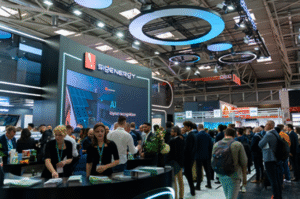
Commercial & Industrial Solutions
Sigenergy introduced its C&I inverter portfolio, covering PV, HYA, and HYB models ranging from 50 kW to 125 kW. The HYB model supports seamless on/off-grid switching with capacities of up to 110 kW, and up to three units can be paralleled without additional gateways.
Complementing these inverters is the SigenStack energy storage system, a high-density, DC-coupled modular solution. Each 12 kWh module scales up to 250 kWh per inverter, delivering optimized round-trip efficiency and simplified deployment for businesses aiming to maximize energy utilization and resilience.
From SigenStor to Microinverters
At the residential level, Sigenergy highlighted SigenStor, the world’s first 5-in-1 energy system. Already a global success, it integrates a PV inverter, battery, EV charger, EMS, and PCS into a compact modular design. Systems can scale beyond 54 kWh and even support C&I projects when connected in parallel.
The company also introduced its second-generation hybrid inverter, featuring a slim, fanless design with industry-leading 99% efficiency on three-phase models. Operating at noise levels below 25 dB, it delivers robust off-grid performance with an IP66 rating and wide temperature tolerance.
For emerging markets like balcony PV, Sigenergy launched SigenMicro, a microinverter with patented DAB topology, built-in EMS, and IP67 protection. With WLAN Mesh architecture boosting coverage by 1600% and five-minute commissioning, it redefines safety, simplicity, and scalability.
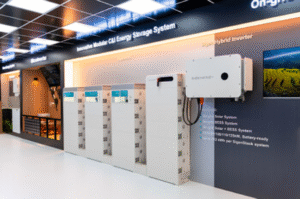
Enabling Smarter, Greener Futures
By offering an integrated and modular product ecosystem, Sigenergy positions itself as a driver of energy innovation in Latin America. Its solutions are tailored to empower both homeowners and businesses, bridging the gap between decentralized renewable energy adoption and grid resilience.
Source
This article is based on the official press release issued by Sigenergy Technology Co., Ltd. on September 10, 2025.
MCatalysis, Inc., an advanced technology startup focused on sustainable fuels and chemicals, has closed its seed funding round led by HL Energy Ventures (HLEV). The investment will accelerate the scale-up of its proprietary microwave catalysis platform, secured under an exclusive worldwide license agreement with Oxford University Innovation (OUI), the technology transfer arm of Oxford University.

Breakthrough Technology for Circular Economy
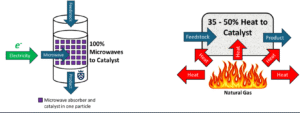
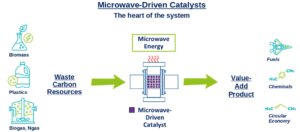
Founded in 2025, MCatalysis is pioneering the use of industrial microwave processes and novel catalysts to repurpose carbon waste—ranging from agricultural residues and plastic waste to industrial gas streams—into low-cost synthetic fuels and chemicals. The process significantly enhances efficiency, reduces energy consumption, and improves product selectivity, positioning the company at the forefront of clean energy innovation.
Strategic Backing from HLEV
CEO Michael Irwin described the funding and license agreement as “a pivotal moment” for the company’s mission to democratize the petrochemical supply chain. HLEV CEO Victor Liu highlighted MCatalysis’s potential for both commercial success and environmental impact, praising the company’s founders and their breakthrough technology.
Oxford Partnership for Global Impact
Through its exclusive license with OUI, MCatalysis now holds global rights to key intellectual property developed at Oxford University. OUI, with over three decades of commercialization expertise, emphasized the collaboration as an example of how academic innovation can drive industrial transformation and support a sustainable future.
About MCatalysis, Inc.
Based in Dallas, MCatalysis develops advanced microwave catalysis systems for producing sustainable fuels and chemicals from waste carbon. The company aims to accelerate the transition to a circular economy. www.mcatalysis.com
About HL Energy Ventures
HLEV is an early-stage venture capital firm backing mission-driven founders in advanced technology and sustainability. www.hlenergyventures.com
About Oxford University Innovation
OUI is Oxford University’s research commercialization office, dedicated to licensing intellectual property, supporting startups, and driving global innovation. innovation.ox.ac.uk
Lennox International Inc. (NYSE: LII), a global leader in energy-efficient climate solutions, has achieved a significant milestone by becoming the first HVAC original equipment manufacturer (OEM) to complete the U.S. Department of Energy’s (DOE) Commercial Building HVAC Technology Challenge laboratory validation. The accomplishment marks a breakthrough in providing high-efficiency cold climate heat pump rooftop units (RTUs) for large-scale commercial use.

The DOE’s Commercial Building HVAC Technology Challenge is designed to accelerate the development of advanced HVAC technologies capable of reducing energy use in commercial buildings, where space conditioning accounts for nearly 40% of total energy consumption in the U.S. Lennox is among eight manufacturers participating in the initiative.
Operational Details
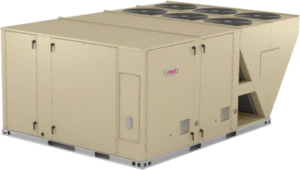
The validated product—a commercial cold climate heat pump RTU in the 15–25 ton category—was tested in collaboration with the National Renewable Energy Laboratory (NREL). Developed at Lennox’s Texas Product Development and Research Laboratory, the unit is engineered to overcome long-standing defrost limitations, ensuring consistent comfort even in severe winter conditions. Later this year, the prototype will be installed in a U.S. commercial building for real-world validation.
Economic Impact
By delivering high-efficiency heating solutions for cold climates, Lennox is supporting businesses in reducing operating costs and lowering their carbon footprint. This innovation strengthens the company’s competitive position in the $60+ billion global HVAC market, while also aligning with DOE’s goals of cutting commercial energy consumption nationwide.
Strategic Significance
According to Lennox CTO Prakash Bedapudi, the achievement reflects years of focused R&D and reinforces the company’s 130-year legacy of innovation. It also builds upon the success of Lennox’s earlier participation in DOE’s Residential HVAC Challenge, where the company was the first to complete Phase 1 testing in 2022. The validation underscores Lennox’s commitment to sustainability, energy efficiency, and customer-centric innovation.
Advertise with Newsletter
 Share your Details for subscribe