
TECHNOLOGY & AUTOMATION




February 2026

January 2026

December 2025

November 2025

October 2025

September 2025
August 2025

July 2025

June 2025


Customer Stories
AI & ROBOTICS
Humanoid Robot Accompanies Melania Trump at White House Tech Summit
A jaw-dropping moment as a walking, talking humanoid robot joins Melania Trump at the White House during the international technology summit. Is this the future of AI and human interaction? Watch till the end to see how the robot interacts in a real-world setting.
Interview
WOMEN SPECIAL
The Gender Gap in Tech: Why Are There So Few Women in Coding?
A study by Dr. Siân Brooke (LSE) explores gender disparity in coding, its causes, and its impact on tech innovation
CUSTOMER STORIES
How Snowflake’s New CEO Plans to Scale the $50.96B Giant
Snowflake CEO Sridhar Ramaswamy shares his plan to scale the $50.96B giant.
ROBOTICS & AUTOMATION
Inside a High-Performance ABB Robotics Hall – Where Automation Powers the Future
A fascinating look at advanced ABB industrial robots in action
INTERVIEW
Lowe’s talent stack is shaping the future of omnichannel retail
A look at Lowe’s innovative approach to omnichannel retail...
AI & ROBOTICS
Ubtech’s Walker S2 Enters Full-Scale Industrial Deployment
The AI takeover is no longer sci-fi. Ubtech’s Walker S2 humanoid robots are moving into real factory environments with autonomous battery swapping .
AI & ROBOTICS
Large Behavior Models Power the Next Evolution of Atlas
In a collaboration between Toyota Research Institute (TRI) and Boston Dynamics, researchers are building language-conditioned.

Manufacturing Robotics
An engineer's guide to understanding the state

Sustainable Development Report 2025
Financing the Future

Global Progress Report 2025
Sustainable Banking and Finance Network

Biotech’s Massive Compute Shift
Bio-AI Compute Surge

Global Corporate Sustainability Report 2025
Corporate Sustainability

Grand Challenge R&D Priorities for U.S. Government
AI Inference

Technology Report 2025
AI leaders are extending their edge.

Cloud computing
Cloud Adoption
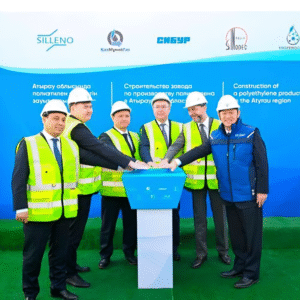
LanzaJet, Inc. and Kazmunaygas (KMG) have reached a major milestone in developing Kazakhstan’s first sustainable aviation fuel (SAF) project. The collaboration, announced during Climate Week NYC, moves into the Front-End Engineering and Design (FEED) phase following a successful joint feasibility study.

LanzaJet CEO Jimmy Samartzis addressed an audience including President Kassym-Jomart Tokayev of Kazakhstan and KMG President Askhat Khasenov. During Climate Week NYC, the two companies signed an agreement to advance SAF production, leveraging LanzaJet’s proprietary alcohol-to-jet (ATJ) technology. This partnership marks LanzaJet’s first deployment in the region.
Operational Details
The project has officially moved into the FEED phase, during which all technical and economic plans for the SAF plant’s construction will be finalized. This stage is crucial for ensuring the feasibility, efficiency, and sustainability of future operations.
Economic and Environmental Impact
Jimmy Samartzis highlighted the strategic importance of Kazakhstan’s industrial sectors, including agriculture, logistics, oil and gas, and aviation. The SAF project is expected to enhance low-carbon flying, boost economic development, and strengthen regional energy security.
Strategic Significance
KMG’s Askhat Khasenov emphasized that the project will support low-carbon development goals, introduce advanced technologies, and positively influence the biofuels market. The initiative is projected to meet Kazakhstan’s SAF demand, anticipated to reach 70,000 tons per year by 2030.
About LanzaJet
LanzaJet is a leading provider of alternative fuel technologies, specializing in ethanol-based ATJ solutions. Supported by partners including Airbus, British Airways, Microsoft, and Shell, LanzaJet accelerates sustainable aviation fuel production worldwide. The company has been recognized by TIME, MIT, and Platts for its contributions to climate tech and energy innovation.
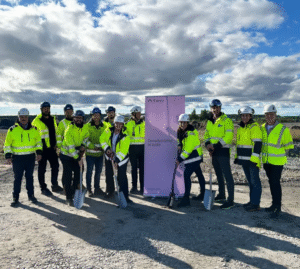
Stegra has entered into two landmark agreements with Microsoft, aimed at advancing the adoption of near-zero emission steel. The first covers the supply of low-carbon steel for Microsoft’s datacenter projects, while the second introduces environmental attribute certificates (EACs), a first-of-its-kind mechanism in the steel industry designed to drive global demand for green steel.
 Supply of Near-Zero Emission Steel
Stegra will deliver steel with up to 95% lower emissions than conventional production from its flagship plant under construction in Boden, Sweden. This steel will be supplied to Microsoft’s datacenter equipment suppliers, helping the tech giant reduce embodied carbon in its expanding datacenter footprint.
Henrik Henriksson, CEO of Stegra, emphasized the importance of collaboration: “Sustainable change calls for unconventional partnerships…to accelerate change in the steel industry.” Jennifer Weitzel, Microsoft’s Corporate VP of Engineering, Construction and Procurement, added that integrating low-emission steel is critical for decarbonizing infrastructure while maintaining hyperscale performance standards.
Environmental Attribute Certificates (EACs)
In addition to physical steel, Microsoft and Stegra signed an agreement for EACs, decoupling the green value from the physical product. While the steel itself is sold as conventional, the EACs allow Microsoft to claim the emissions reductions corresponding to the nearly zero-emission steel.
Melanie Nakagawa, Chief Sustainability Officer at Microsoft, noted: “When physical delivery isn’t yet feasible, EACs demonstrate that emissions reductions are possible in the value chain, signal demand, enable project financing, and accelerate global production.”
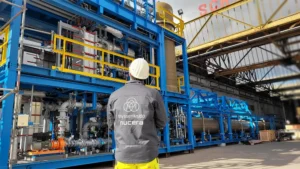
Driving Sustainable Steel Production
This innovative approach ensures no double-counting of emission reductions while promoting broader adoption of green steel. By separating the green value from physical steel, the partnership encourages larger volumes and expanded geographic availability of near-zero emission steel.
Henriksson highlighted the industry impact: “It’s impressive that Microsoft has chosen to team up with Stegra and put something completely new on the steel market, incentivizing bigger volumes and more locations for steel production with close to zero emissions.”
EVE Energy has achieved a historic breakthrough in the energy storage industry by completing the world’s first 400MWh project powered by 628Ah ultra-large cells. The project, part of Phase II of the Ruite New Energy initiative in Lingshou, Hebei Province, demonstrates the scalability, reliability, and global potential of large-cell technology.
Breaking New Ground in Large-Cell Energy Storage
As the demand for clean and reliable energy accelerates, cells exceeding 600Ah are emerging as a critical enabler of higher energy density, improved safety, and reduced lifecycle costs. On September 8, the 200MW/400MWh standalone energy storage project—jointly developed by EVE Energy and State Grid Power Technology—was successfully energized, marking the first-ever large-scale deployment of 628Ah cells at a 100MWh-level facility.
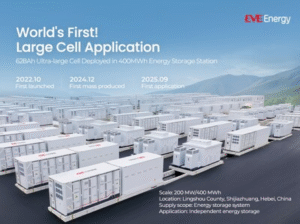
Rapid Deployment and Reliable Operation
EVE Energy demonstrated exceptional execution by delivering 80 Mr.Giant energy storage systems and 40 integrated converter cabins within just one week. From stringent quality control to commissioning and operational support, the project highlights the maturity and feasibility of ultra-large battery systems.
Supporting the Grid and Green Transition
The project enhances grid peak-shaving, frequency regulation, and renewable energy integration in Hebei Province, significantly improving power supply reliability. It also provides valuable practical experience for scaling large-cell solutions, supporting China’s carbon-reduction and energy transition goals.
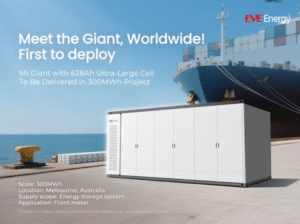
Global Expansion of “Mr.Giant”
Beyond China, EVE Energy’s Mr.Giant storage systems, equipped with 628Ah cells, began overseas shipments to Australia and Europe on September 10. Known for their minimalist design, efficiency, low noise (≤65dB), and suitability for long-duration (4+ hour) storage, these systems are gaining international recognition.
Future Outlook
By successfully realizing both domestic deployment and global delivery of 628Ah-based systems, EVE Energy has propelled the energy storage sector into a new phase of efficiency, reliability, and scalability. Moving forward, the company will continue advancing big-battery technology and partnering worldwide to accelerate the green energy transition.
Source: EVE Energy
Advertise with Newsletter
 Share your Details for subscribe